A premium aquarium in an office, hotel lobby, or waiting room is more than a decorative feature. When designed correctly, it becomes a focal point that shapes the atmosphere of the space, influences how visitors perceive the environment, and introduces a sense of calm, movement, and refinement that few other elements can achieve.
This article explores seven distinct aquarium concepts suited to professional and hospitality settings.
For each, we look at why the format works, how it integrates into the surrounding architecture, and the key technical and design considerations to address when introducing an ornamental fish tank into a commercial space.
Learn more about types of commercial aquariums here.
What Are 7 Premium Aquarium Ideas for Offices and Hotel Spaces?
1. Built-In Wall Aquarium for Hotel Lobbies

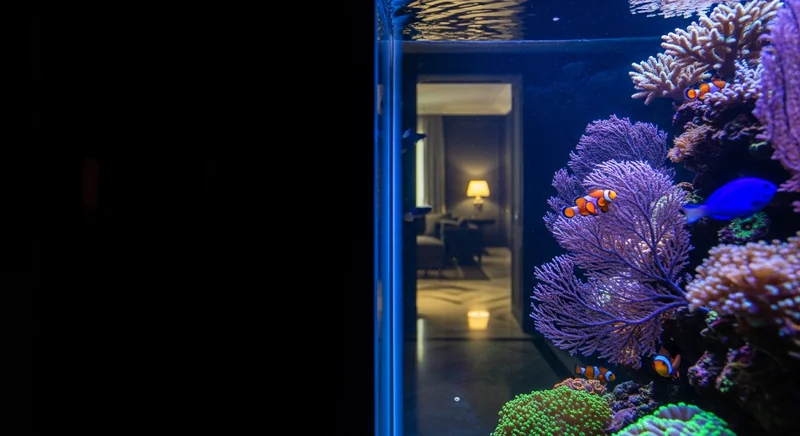
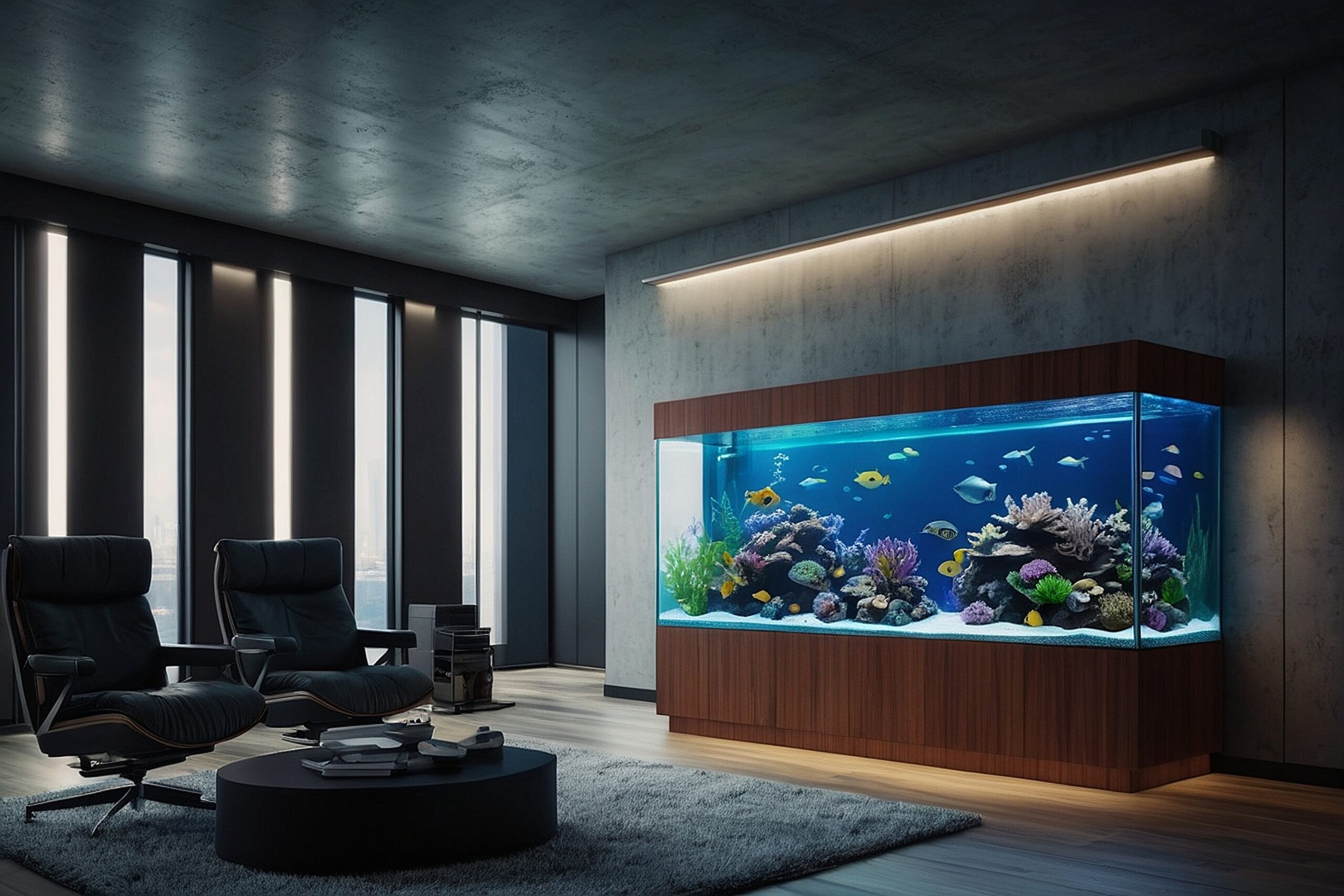
A luxury aquarium for hotel lobby installations is most effective when integrated directly into the architecture rather than treated as a standalone object. A built-in wall aquarium creates a strong arrival moment, acting as a living feature wall that anchors the reception experience.
It can be designed to align with surrounding materials such as stone, timber, or metal finishes, reinforcing the interior design language while adding movement and depth to the space. This format works particularly well in boutique hotels and high-end corporate lobbies where first impressions are critical.
2. Room Divider Aquarium for Open-Plan Reception Areas

In open-plan offices and corporate reception spaces, a freestanding aquarium can function as a subtle spatial divider. Instead of using walls or partitions, the aquarium defines zones while maintaining visual openness.
This type of installation works especially well in modern office environments where transparency and flow are important. It also creates a natural focal point behind reception desks or seating areas without interrupting circulation.
3. Cylindrical Statement Aquarium for Waiting Rooms

A cylindrical aquarium offers a 360-degree viewing experience, making it ideal for central placement in waiting rooms and reception lounges. Its vertical form draws the eye upward, helping smaller spaces feel more open and balanced.
Unlike wall-mounted formats, this type of installation engages viewers from every angle, making it particularly effective in healthcare, hospitality, and professional service environments where multiple seating directions are involved.
4. Cabinet-Integrated Aquarium for Executive Offices

For private offices and executive environments, a cabinet-integrated aquarium offers a refined, furniture-based solution. The aquarium becomes part of a bespoke joinery system, matching desks, shelving, or wall units.
This approach keeps the installation visually discreet while still delivering the calming effect of moving water and aquatic life. It is particularly suited to leadership offices, private meeting rooms, and high-end consultancy spaces.
5. Marine Feature Aquarium for Restaurants and Bars

In hospitality environments such as restaurants and bars, a marine aquarium adds movement, color, and atmosphere without requiring the complexity of a full reef system. Carefully selected fish create visual activity throughout the day and evening service.
This type of installation works well as a feature wall behind seating areas, near entrances, or integrated into bar structures where ambient visual engagement enhances the guest experience.
How to Choose the Right Premium Aquarium for Your Space
Selecting the right aquarium format is less about personal preference and more about how the installation will function within the space, both visually and practically. Different environments place different demands on scale, viewing angles, maintenance access, and overall architectural integration.
Rather than choosing based on appearance alone, it is useful to think in terms of three key factors: space type, level of visual impact, and operational complexity.
If you are designing a hotel lobby or high-traffic reception area
Built-in wall aquariums and large entrance features are typically the most effective options. These formats create a strong first impression and work best when the aquarium is treated as part of the architecture rather than an object within it. They are especially suitable for luxury hotels where arrival experience is a key part of the brand identity.
If you are working with an open-plan office or corporate environment
Room-divider aquariums and frameless display tanks tend to perform best. These installations introduce structure without reducing visual openness, making them ideal for modern workplaces that prioritise transparency, collaboration, and flow. They also integrate well into reception desks and shared workspaces.
If the goal is a focused, private or executive setting
Cabinet-integrated aquariums are usually the most appropriate choice. These are designed to blend into furniture and joinery, creating a quieter, more controlled presence. They work particularly well in executive offices, boardrooms, and private meeting spaces where subtlety is more important than scale.
If the priority is maximum visual impact with a minimal footprint
Cylindrical statement aquariums are often the best solution. Their 360-degree visibility allows them to function as sculptural centrepieces, making them suitable for waiting rooms, smaller lobbies, and hospitality lounges where space is limited but visual impact is still important.
If the environment is hospitality-driven and experience-focused
Marine feature aquariums offer a strong balance between visual interest and operational simplicity. They provide movement, colour, and atmosphere without requiring the complexity of a full reef system, making them ideal for restaurants, bars, and guest-facing hospitality spaces.
Related articles:
Frequently Asked Questions
How much does a premium aquarium for an office or hotel lobby cost?
The cost of a luxury aquarium for a hotel lobby or commercial reception area depends on size, format, species selection, and whether the installation is custom-built to integrate with the architecture. Turnkey commercial installations typically begin at a meaningful investment level and increase with complexity. A consultation is the most accurate way to understand the cost range for a specific project.
Who handles maintenance for a commercial aquarium?
In most commercial installations, maintenance is handled by the installation company or a specialist service provider on a scheduled basis. This typically includes water testing, partial water changes, equipment inspection, glass cleaning, and livestock health checks. The business’s own team is rarely involved in day-to-day care.
How long does it take to install a commercial aquarium?
Installation timelines vary significantly depending on the scale and complexity of the project. A standard built-in wall installation may take several days for the physical fit-out, followed by a cycling period of several weeks before livestock is introduced. Larger architectural installations, such as tunnel systems or full-height lobby features, require coordination with the wider construction or fit-out schedule and are best planned well in advance.
Can an aquarium be installed in an existing office without major construction?
Yes, depending on the format chosen. Freestanding cylindrical or cabinet-integrated aquariums can be installed in most existing environments with minimal structural work. Built-in wall installations require more planning but can often be accommodated during a scheduled refurbishment period. The level of disruption depends on the installation type and is something to discuss with the design team early in the process.