The aquarium as a design object is undergoing a significant transformation.
Where previous generations understood it primarily as a piece of furniture containing fish, the contemporary aquarium is increasingly understood as an architectural element: a feature that participates in the spatial and atmospheric logic of a room rather than simply occupying a position within it.
In 2026, the most compelling contemporary aquarium designs are those that blur the boundary between the aquatic installation and the interior architecture that surrounds it, producing results that are as resolved and considered as any other element of a high-end space.
What Defines a Contemporary Aquarium in 2026
A contemporary aquarium in 2026 is defined less by decoration and more by integration. Rather than being treated as a standalone object, the aquarium is designed as part of the architecture, responding to the proportions, materials, and lighting of the space it occupies.
Designed for the Space, Not Added to It
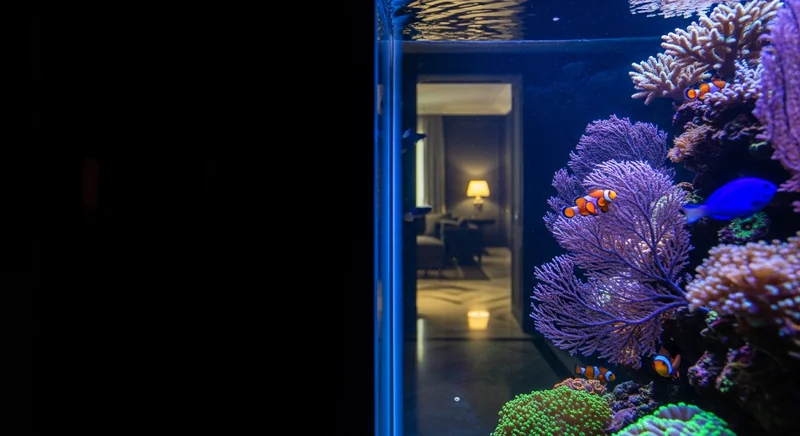
A contemporary fish tank is typically planned alongside the interior layout. This means considering wall alignment, sightlines, and viewing angles before selecting the format. Built-in panels, room dividers, and freestanding columns are often chosen because they solve a spatial need while also acting as a visual feature. The result is an installation that feels intentional rather than placed.
Material and Finish Consistency
Contemporary aquariums usually echo the material palette of the surrounding interior. Stone surrounds, timber cabinetry, or metal detailing help the tank read as part of the room. Matching finishes between the aquarium structure and existing architectural elements is one of the most effective ways to achieve a cohesive result.
Lighting as Part of the Interior Design
Lighting is also integrated into the overall scheme rather than treated as an isolated element. The aquarium’s illumination is calibrated to complement ambient lighting, avoid glare, and contribute to the atmosphere of the space. In many contemporary installations, the tank functions as both a focal point and a subtle secondary light source.
Key Formats Driving Contemporary Aquarium Design
Several formats have emerged as particularly representative of the direction in which contemporary aquarium design is moving:
- The flush-panel built-in — an aquarium whose viewing surface is flush with the surrounding wall, creating a seamless, almost frameless appearance that integrates the water into the architecture without visual interruption. This format is particularly associated with minimalist and Scandinavian-influenced interiors.
- The architectural room divider — a freestanding or semi-built-in aquarium that defines a boundary between two areas within an open-plan space, combining the practical function of a partition with the aesthetic quality of a living installation.
- The cylindrical column — a freestanding tank in a circular or ovoid form, positioned as a sculptural object within the room. This format references the history of the pedestal display in art and design, treating the aquarium as an object worthy of three-dimensional contemplation.
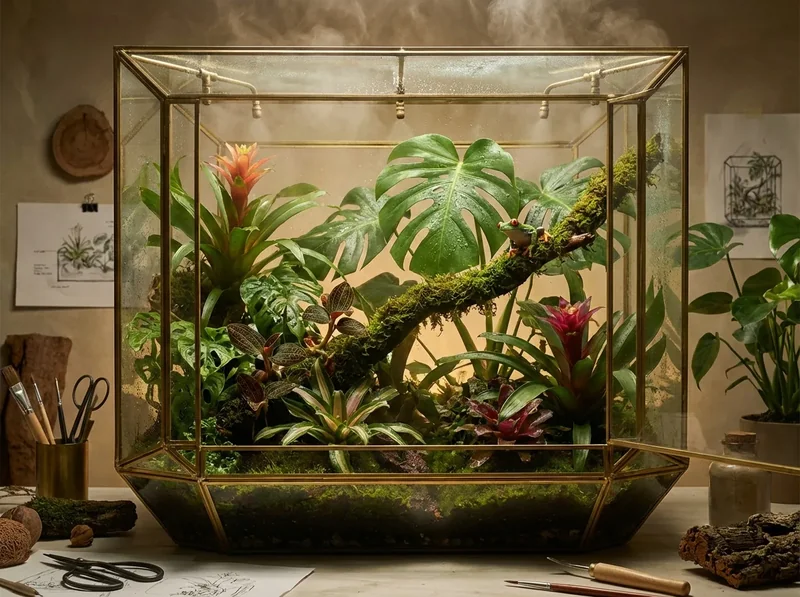
- The unique freshwater aquarium with a planted landscape — a freshwater installation in which the aquatic planting is treated as a horticultural composition, with layered textures, varied leaf forms, and a palette of greens that brings a quality of interior garden into the room.
- The ultra-clear frameless panel — a large-format aquarium using low-iron glass and minimal framing to create a viewing surface of maximum optical purity, allowing the aquatic interior to be seen without distortion or tint.
Materials and Finishes for a Modern Aquarium
Material selection plays a key role in how a contemporary aquarium integrates into a modern interior. Rather than standing out as a separate object, the aquarium is typically finished using the same materials already present in the space, allowing it to read as part of the architecture.
Surround Materials and Integration
Natural stone, timber, and brushed metals are commonly used to frame or house contemporary aquariums. A tank recessed into a stone wall, for example, feels architectural and permanent, while an aquarium integrated into matching cabinetry reads as part of the furniture design. Choosing finishes that mirror nearby surfaces helps the installation feel cohesive rather than decorative.
The base or surrounding structure should also be considered from both visual and practical perspectives. Materials need to accommodate access panels, ventilation for equipment, and maintenance openings without disrupting the clean lines of the design.
Glass Quality and Optical Clarity
Glass specification is another important factor. Contemporary aquariums typically use low-iron, ultra-clear glass to minimise colour tint and improve visual clarity. This is particularly noticeable in minimalist interiors, where distortion or green tint would be more apparent.
Larger installations may require thicker panels, so selecting high-quality glass helps maintain transparency even at greater thickness. When correctly specified, ultra-clear glass enhances depth, colour accuracy, and the three-dimensional effect of the aquatic environment, elevating the overall presence of the installation.
Learn more about Glass vs Acrylic Aquariums Here.
Contemporary Freshwater Aquarium Design: An Underappreciated Opportunity
Freshwater planted aquariums are increasingly used in contemporary interiors where a calmer, more architectural aesthetic is preferred. While marine reefs offer colour and complexity, freshwater aquascapes provide a more restrained visual language based on greenery, structure, and depth.
Why Choose a Freshwater Planted Aquarium
A contemporary freshwater aquarium often focuses on aquascaping, where plants, rocks, and substrate are arranged as a composed landscape. Layered planting, sculptural driftwood, and carefully positioned stone create a layout that reads more like an interior garden than a traditional fish tank. This approach works particularly well in minimalist spaces, offices, and residential interiors where subtlety is preferred over visual intensity.
Freshwater systems also allow for controlled colour palettes. Greens, soft browns, and neutral tones integrate easily with natural materials such as wood, stone, and plaster, making the aquarium feel cohesive with the surrounding architecture.
Freshwater vs. Marine in Contemporary Design
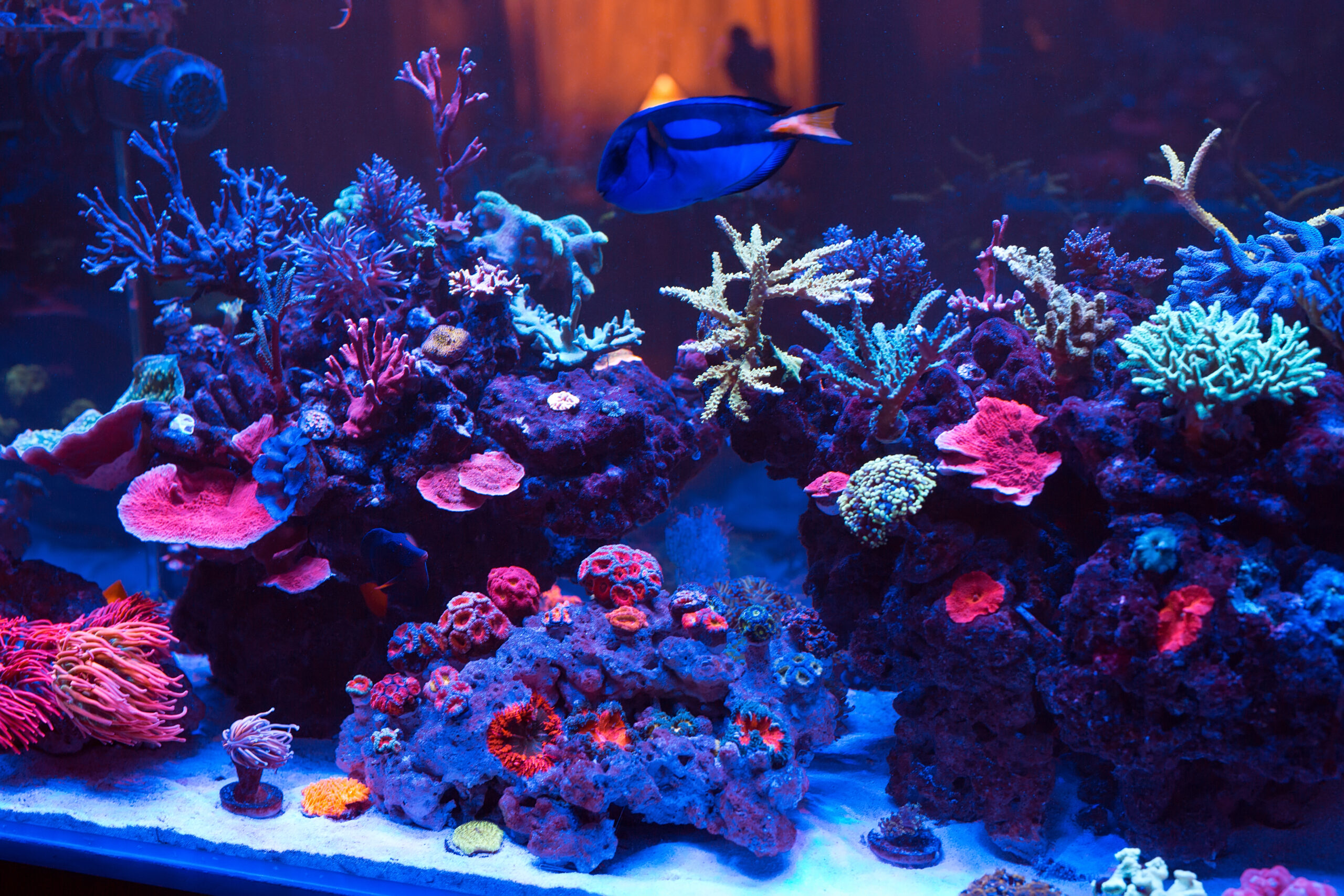
The visual effect of a freshwater aquascape differs significantly from a marine reef. Reef aquariums tend to be vibrant and highly detailed, with coral growth and strong colour contrasts. Freshwater planted designs are typically more serene and structured, emphasising negative space, depth, and gradual movement.
The Role of Lighting in Contemporary Aquarium Design
Lighting plays a central role in contemporary aquarium design, influencing both how the aquatic environment appears and how the installation interacts with the room. Rather than being treated as a technical necessity, aquarium lighting is typically planned as part of the overall lighting scheme, aligned with ambient light levels and the intended atmosphere of the space.
Integrating Aquarium Lighting with the Room
In contemporary interiors, the aquarium often functions as a secondary light source. Calibrating brightness and colour temperature helps the tank complement surrounding lighting rather than overpower it. Cooler tones can enhance clarity and colour contrast in modern spaces, while warmer lighting integrates more naturally with wood, stone, and softer material palettes.
Adjustable LED systems are commonly used to adapt lighting throughout the day. Brighter, neutral light during daytime hours maintains visual clarity, while softer evening lighting allows the aquarium to contribute to a more relaxed ambience.
Even Illumination and Visual Balance
Contemporary aquariums, particularly large or built-in formats, benefit from evenly distributed lighting. This prevents shadowing, highlights aquascaping details, and ensures the tank reads clearly from different viewing angles. Layered lighting or high-output LED fixtures are often used to maintain consistent illumination across the full height and depth of the aquarium.
Atmospheric Effect in the Space
Well-designed aquarium lighting also influences the surrounding interior. The movement of water creates subtle reflected patterns on nearby surfaces, adding a dynamic quality that changes throughout the day. When integrated thoughtfully, the aquarium becomes both a focal point and an atmospheric lighting element within the room.
Frequently Asked Questions
What is the difference between a modern aquarium and a contemporary aquarium?
In design language, ‘modern’ typically refers to a specific historical period and aesthetic, while ‘contemporary’ refers to what is current. A contemporary aquarium is one that reflects the design sensibilities and technical possibilities of the present moment, which in 2026 means a strong emphasis on architectural integration, material quality, lighting sophistication, and the treatment of the aquarium as a spatial element rather than a decorative accessory.
Are contemporary aquariums more difficult to maintain than traditional designs?
Contemporary aquarium formats are not inherently more difficult to maintain than traditional ones. The emphasis on integration and clean aesthetics means that the technical systems are often more discreetly housed and require specialist access, but the maintenance requirements of the aquatic system itself are determined by the species and environment chosen rather than the design format. A professional maintenance arrangement is recommended for all high-end installations regardless of format.
Can a contemporary aquarium work in a traditional or period interior?
Yes, and some of the most interesting contemporary aquarium installations are those that create a productive dialogue between a traditional architectural setting and a precisely contemporary aquarium design. The contrast between an ornate period interior and a frameless, ultra-clear aquarium can be extremely effective when handled with confidence and a clear design intention.
What aquatic species work best in a contemporary aquarium design?
Species selection for a contemporary aquarium should be guided by the visual effect desired. For a minimalist, high-contrast aesthetic, a small number of larger, visually distinctive fish in an uncluttered setting can be very effective. For a planted aquascape design, species that complement the greenery and remain mid-water are typically preferred. A design team with aquatic expertise can advise on species that align with both the aesthetic ambition and the technical parameters of the specific installation.
How do contemporary aquarium designs handle noise from filtration?
Modern filtration systems, when correctly specified and installed, produce very little audible noise, and in a well-designed installation the sound of water movement is subtle and ambient rather than intrusive. For particularly noise-sensitive environments, filtration systems can be specified with acoustic insulation, and the location of the filtration equipment can be planned to minimise any sound that does reach the living space.
Design That Moves With the Room
A contemporary aquarium succeeds not by imposing itself on the space around it but by participating in its logic: moving with the light, responding to the materials, and contributing a quality of living presence that enriches rather than disrupts. The most compelling modern aquariums of 2026 are those that you would not imagine removing once they are in place, because their absence would leave the room diminished in a way that is difficult to articulate but immediately felt. That quality of integration is what contemporary aquarium design, at its best, is designed to achieve.