Aquarium design
Moving water is the most powerful biophilic element for enclosed spaces. Brought into the home, it definitively transforms the perception of space.
Discover our aquariums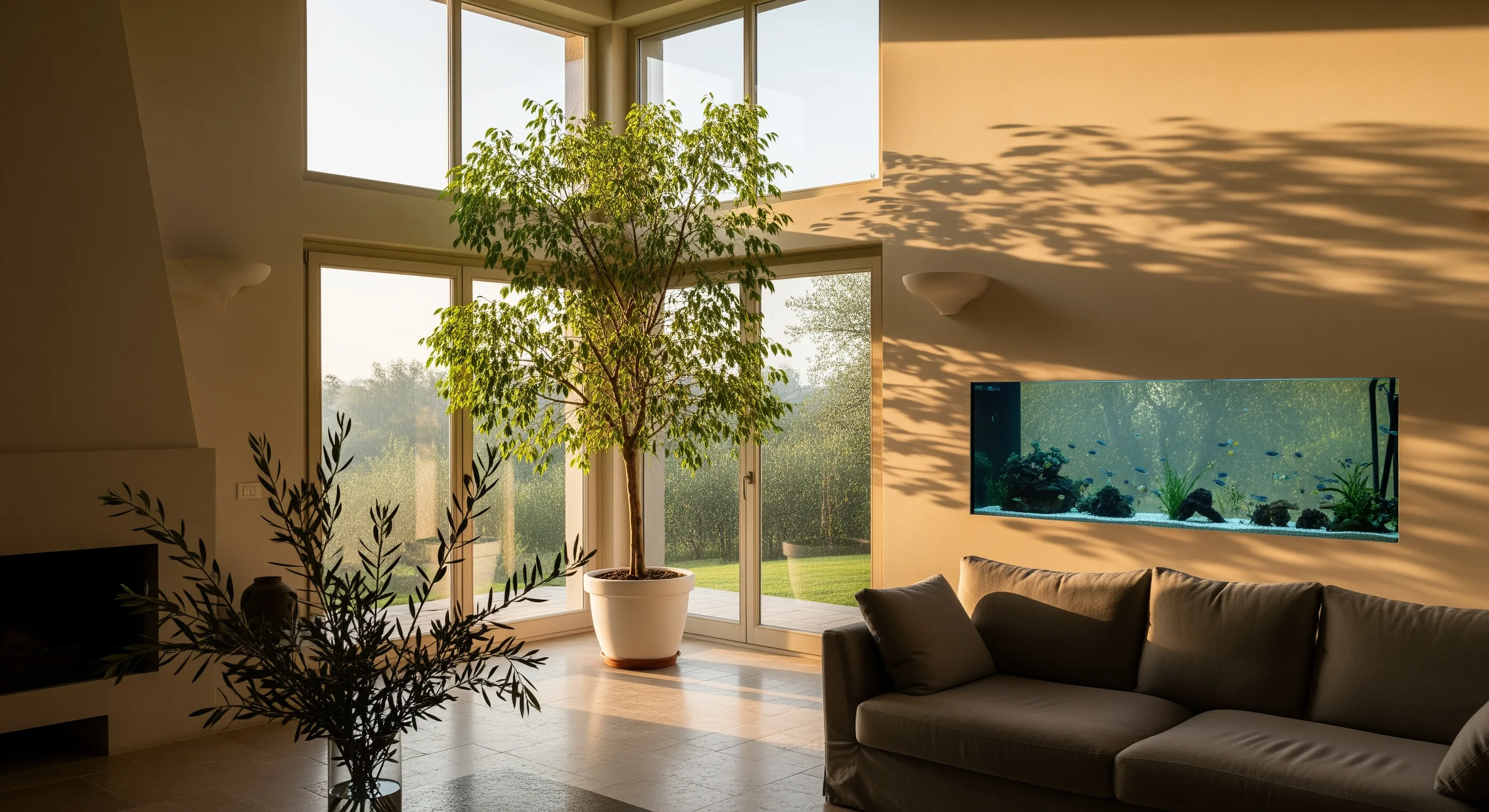
Nature acts on the body in a precise and measurable way. Biophilic design brings those effects into your home.
For millions of years, human beings lived in open natural environments. The nervous system evolved to respond precisely to certain stimuli: moving water, vegetation, zenithal light, wide horizons, safe refuges.
When these elements are absent — as they almost always are in modern homes and offices — the body registers a subtle but constant form of stress. Not enough to be recognised, enough to wear it down.
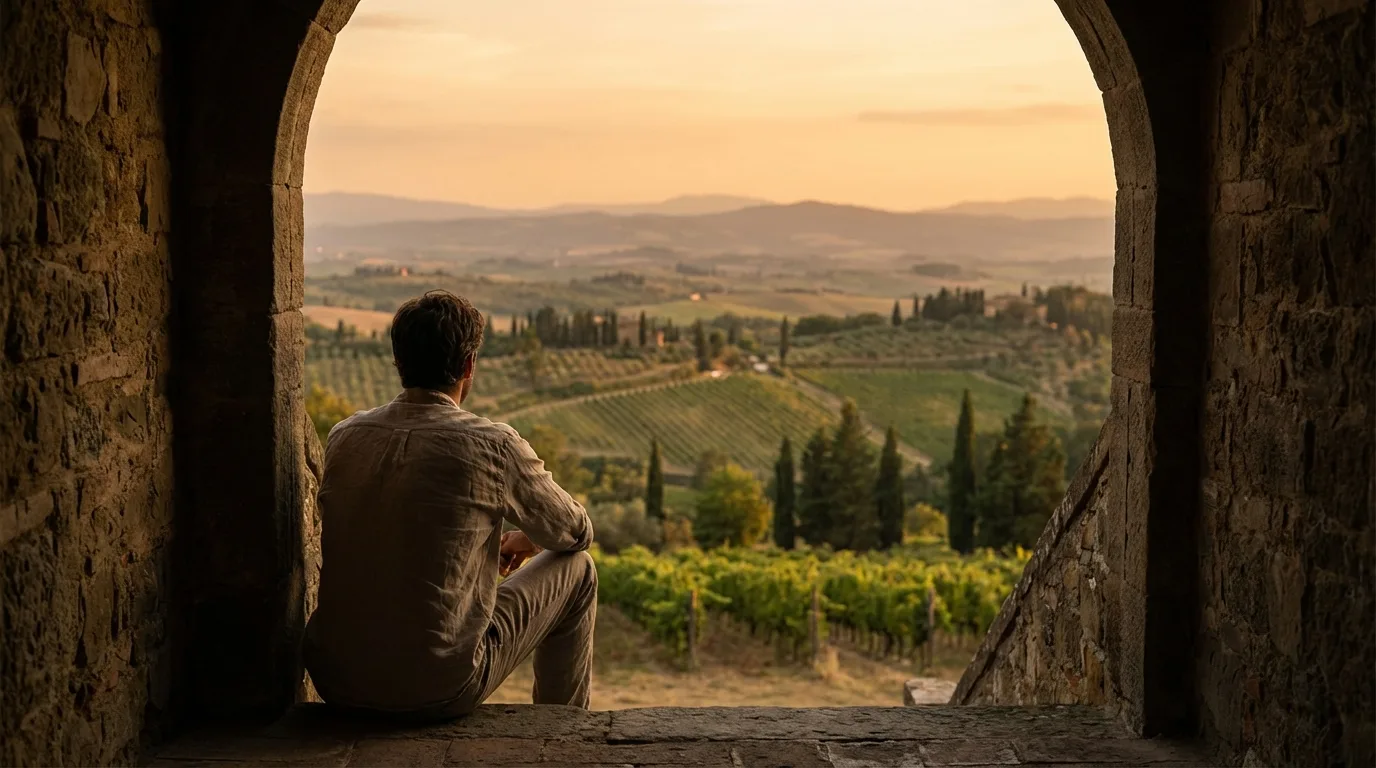
The human being thrives when they can observe a wide horizon from a safe point of refuge.
Savannah Hypothesis — Appleton, 1975
The brain rewards wide vision: open horizons, transparencies, depth. A space that does not allow distal vision generates a state of diffuse, unconscious but continuous alertness.
The counterpart to prospect: a sheltered corner, a low ceiling, a dense texture behind you. Perceived safety lowers cortisol and restores cognitive resources.
Every natural element produces measurable effects on body and mind.
| Element | Measured effect | Practical impact |
|---|---|---|
| Solid wood | Reduction of heart rate by 8,600 beats/day | Environment perceived as warmer and more reassuring |
| Moving water | Reduced blood pressure + acoustic masking | +36% dwell time; higher perceived space quality |
| Natural and fractal patterns | Reduction of psychological stress up to 60% | Learning speed improvement +20–26% |
| Circadian lighting | Melatonin regulation | +6% productivity, +15% creativity |
| Visual connection to green | Post-operative recovery acceleration 8.5% | Absenteeism reduction in work environments |
| Source: Human Spaces Report · Terrapin Bright Green · Scandinavian Journal of Forest Research | ||
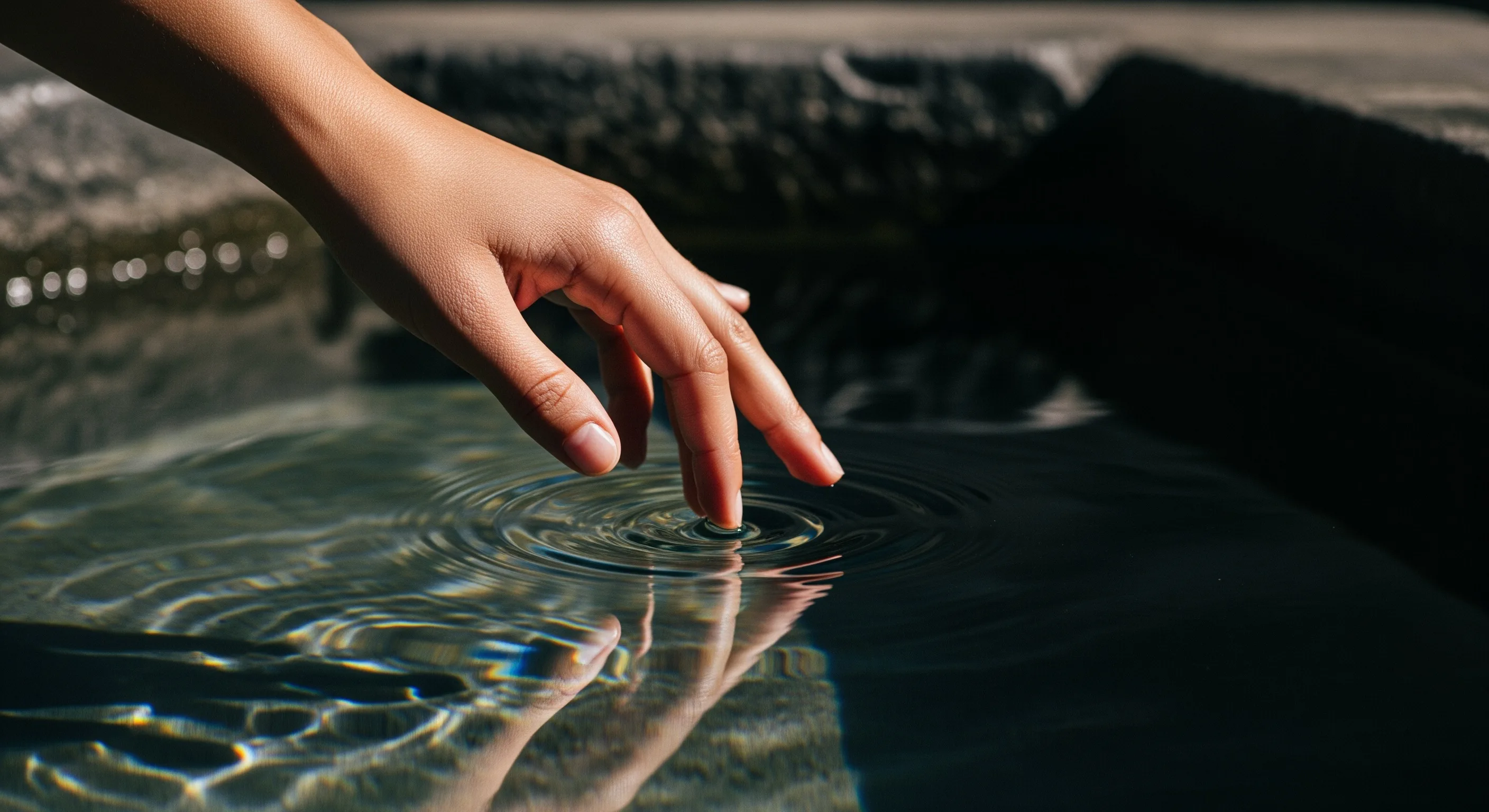
The movement of water — slow, non-rhythmic, semi-random — activates a neurological mechanism called soft fascination: a form of relaxed attention that captures the gaze without consuming cognitive resources. The result is a state of alert rest: calm, yet present.
It is the same effect experienced watching fire, leaves moved by wind, sunlight reflected on a lake. A CaVenza aquarium brings this mechanism into your home. Not as decoration: as architecture of wellbeing.
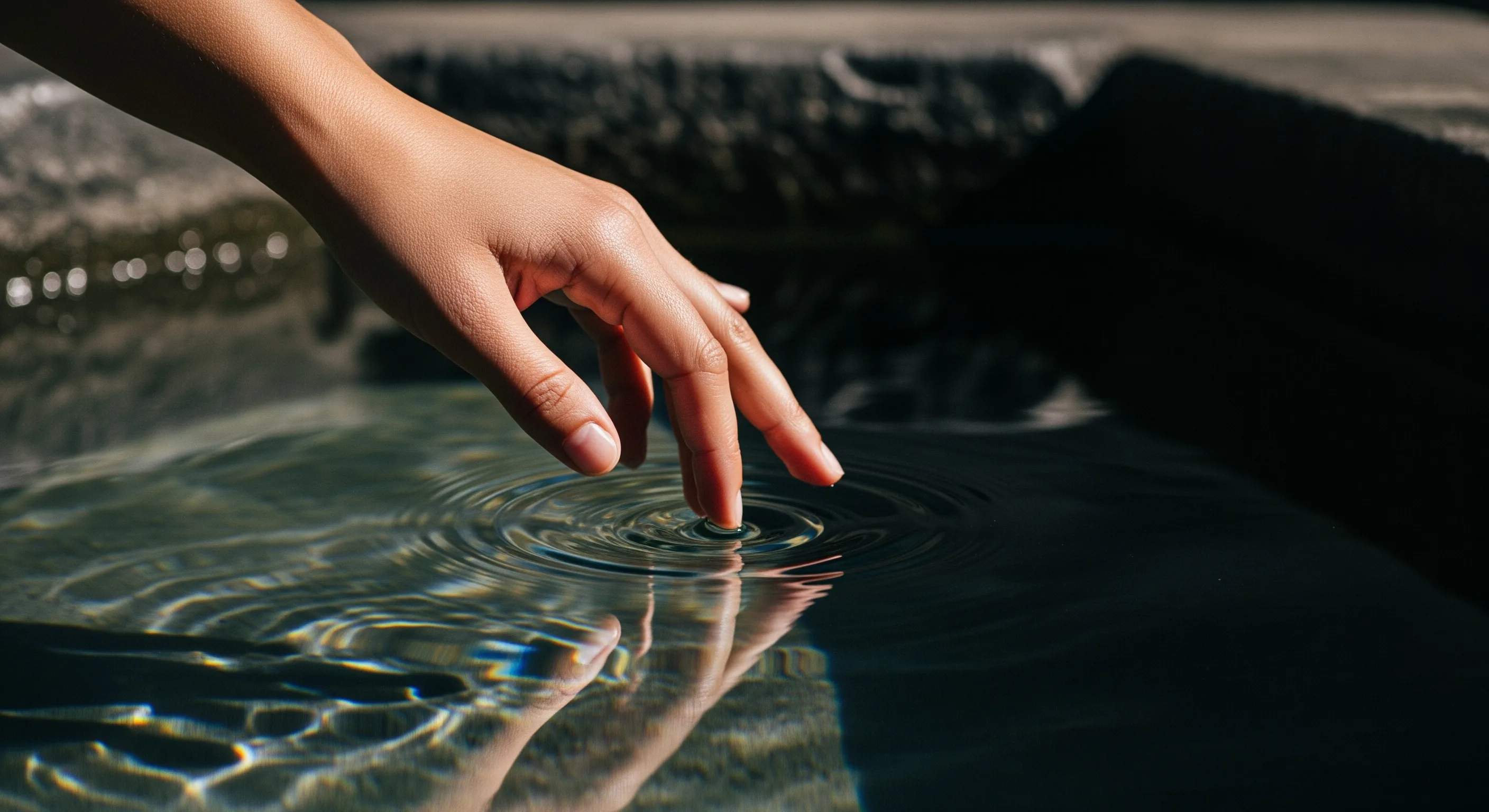
Moving water is the most powerful biophilic element for enclosed spaces. Brought into the home, it definitively transforms the perception of space.
Discover our aquariumsGreen, stone, humidity, soil. A terrestrial ecosystem brings the textures of the natural world in a way that no single furnishing material can replicate.
Discover our terrariumsAll our pools are in structural glass — not an option, our standard. Water becomes an architectural surface: refracting light, total transparency, depth that enters the room.
Discover our poolsNature finds space everywhere. How close do you want it, every day?
Desk plants, views of green, natural materials. A small but continuous dose that reduces the baseline of stress.
Garden, park, living wall. More intense but less frequent exposures: they regenerate but do not inhabit daily space.
The kind that definitively transforms the space. You do not "visit" it: you inhabit it. Every day, effortlessly, without going outside.
The place where residential wellbeing has the greatest impact. The aquarium or terrarium becomes part of the architecture, not added afterwards.
− screens + smiles and time with your childrenIncreases guest satisfaction, creates a distinctive sensory identity. The natural element becomes part of the story of the place.
+36% perceived dwell timeWaiting rooms with natural elements are perceived 40% better. Anxiety decreases, the perception of service quality rises.
−40% perceived waiting timeImproved concentration, reduced turnover, corporate identity that communicates care for people. Biophilic design is employer branding.
+ wellness for your talent + productivity