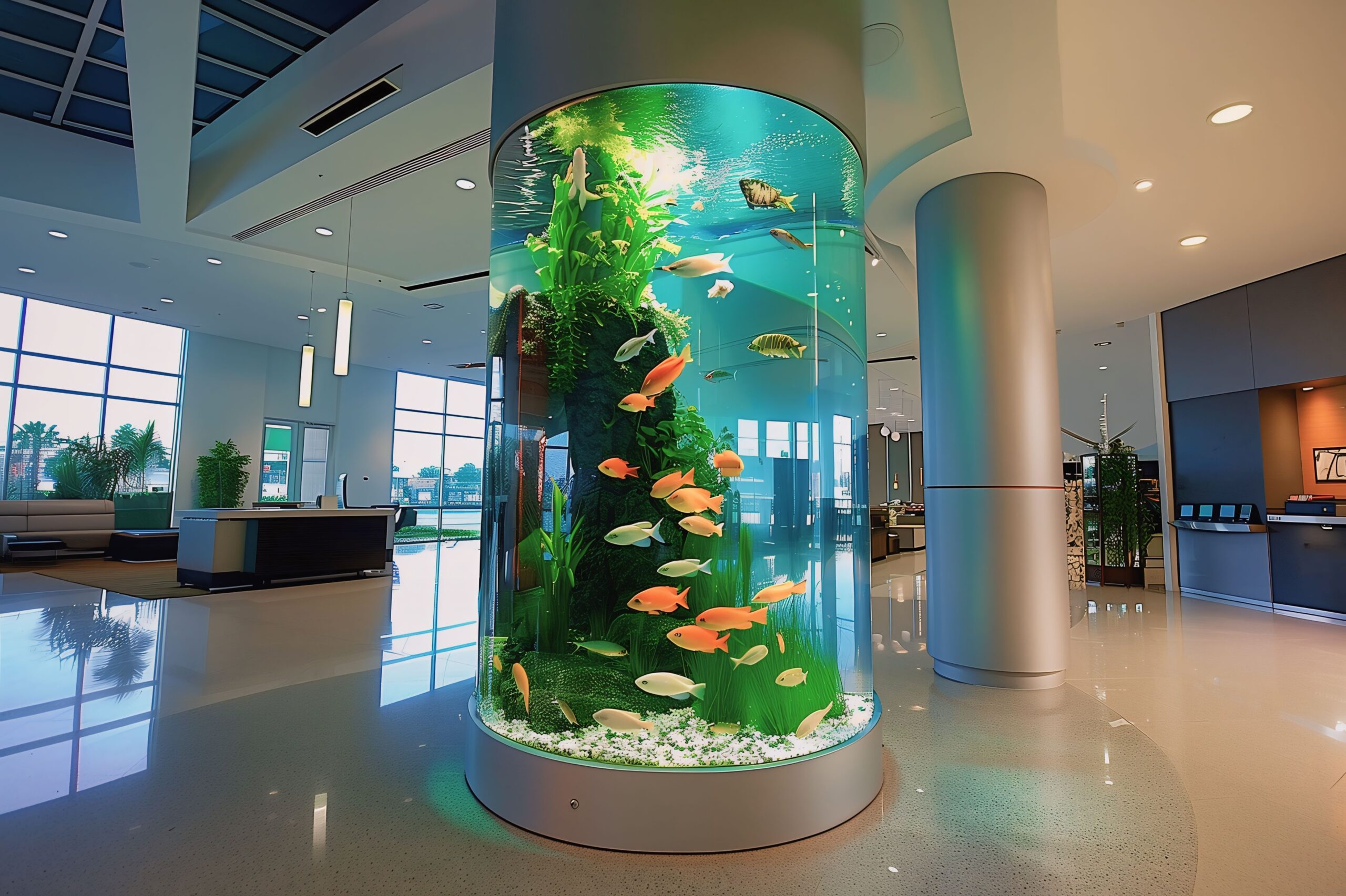
The cylindrical fish tank has earned a distinct place in contemporary luxury interior design, valued not only for the aquatic life it houses but for the sculptural presence it brings to any space.
Unlike traditional rectangular aquariums, which are designed to be viewed from one or two sides, a cylindrical fish tank offers a 360-degree perspective, allowing the movement and colour of the aquatic environment to be appreciated from every angle.
This quality makes it particularly well suited to open-plan living spaces, hotel lobbies, and restaurant interiors where traffic flows from multiple directions and the visual centrepiece must hold its own from any vantage point.
What is a Cylindrical Fish Tank?
A cylindrical fish tank is defined by its circular shape and 360-degree viewing experience. Unlike rectangular aquariums designed to be viewed primarily from the front, a cylinder aquarium is intended to be seen from all sides, making it particularly effective in open spaces such as living rooms, hotel lobbies, reception areas, or restaurants where people move around the installation.
Proportions and Visual Impact
Cylindrical fish tanks can vary significantly in proportion, and choosing the right format affects how the aquarium interacts with the space.
Tall, narrow cylinders emphasise height and work well in rooms with high ceilings, atriums, or stair voids where vertical presence is desirable. Wider, lower cylinders create a more sculptural focal point and are often used in lounges, waiting areas, or retail environments where the aquarium is viewed at seated eye level.
The diameter is just as important as the height. A cylinder that is too narrow may limit aquascaping and fish movement, while one that is too wide can reduce the sense of vertical elegance. Balancing height and diameter ensures the aquarium feels intentional rather than oversized or under-scaled for the room.
Technical Characteristics of Cylindrical Aquariums
The circular geometry also changes how the aquarium functions technically. Water circulation must be designed to move evenly around the tank to avoid dead zones, which are more likely in cylindrical formats than in rectangular ones. This typically involves central return outlets, circular flow patterns, or custom filtration layouts designed specifically for the tank’s dimensions.
Lighting is usually positioned from above, making even vertical illumination important, particularly in taller cylinders. Without sufficient light penetration, the lower portion of the tank can appear darker, reducing visual balance. High-output LED lighting or layered lighting systems are commonly used to maintain clarity from top to bottom.
Because filtration, lighting, and water movement must all be calibrated to the cylinder’s proportions, bespoke cylindrical fish tanks generally perform more reliably than standard off-the-shelf models. When properly designed, the result is a stable aquatic environment with consistent clarity and a balanced visual presence from every angle.
Design Considerations for a Cylindrical Aquarium
Before commissioning a cylindrical aquarium, it is worth evaluating a few key design decisions that will determine how successfully the installation integrates into the space. Proportion, ecosystem choice, and lighting all influence both the visual impact and the long-term performance of the tank.
Choosing the Right Height and Diameter
Proportion is one of the most important factors. A cylindrical fish tank should relate to the ceiling height and surrounding furniture so it feels intentional within the room. Tall, slender cylinders work well in double-height spaces, entrances, or open-plan interiors where vertical emphasis is desirable. In more intimate environments, a mid-height cylinder often creates a stronger focal point without dominating the space.
Diameter also affects usability and visual balance. Very narrow cylinders limit aquascaping options and fish movement, while overly wide tanks can lose the elegant column-like presence that defines this format. Considering viewing distance is helpful: larger diameters are better suited to open areas, while slimmer profiles work well in tighter layouts.
Selecting the Aquatic Ecosystem
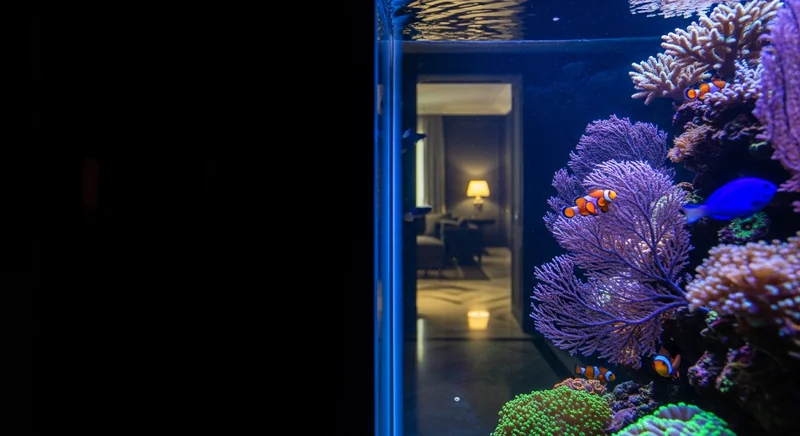
The choice between freshwater and marine setups also shapes the overall design. Freshwater tropical environments typically provide continuous movement, vibrant colours, and relatively straightforward maintenance, making them suitable for high-traffic commercial or residential spaces. Marine or reef ecosystems offer greater visual complexity, with coral structures and varied textures, but require more advanced filtration, lighting, and ongoing care.
Cylindrical aquariums are also particularly suited to jellyfish displays, as the circular shape supports the gentle, continuous flow these species require. This creates a minimal, contemporary effect defined by slow, suspended movement and soft lighting.
The cylindrical shape tends to favour species that move smoothly around the tank rather than those that rely on long horizontal swimming space. Planning the ecosystem early ensures the internal layout, rockwork, and planting complement the circular viewing experience.
Lighting and Visual Integration
Lighting should be considered part of the design rather than added later. Most cylindrical aquariums are illuminated from above, so light intensity must be sufficient to reach the lower portion of the tank evenly. Taller cylinders often benefit from high-output LED systems or layered lighting to avoid shadowing.
The colour temperature of the lighting also influences how the aquarium interacts with the surrounding interior. Warmer tones integrate well with natural materials such as wood and stone, while cooler lighting enhances clarity and colour contrast in more contemporary environments. Thoughtful lighting helps the cylinder read as a cohesive architectural feature rather than simply a decorative object.
Materials for a Cylindrical Aquarium Tank: Glass vs. Acrylic
Material choice plays an important role in both the appearance and performance of a cylindrical fish tank. Because the curved surface is continuously visible from all angles, optical clarity, panel thickness, and structural behaviour all become more noticeable than in rectangular formats.
Glass Cylindrical Aquariums
Glass is often chosen for smaller to mid-sized cylindrical tanks where rigidity and scratch resistance are priorities. Low-iron glass, sometimes referred to as ultra-clear glass, reduces the green tint found in standard glass and allows colours to appear more natural and crisp. This is particularly important in cylindrical formats, where the viewer sees through multiple layers of water and material at once.
Glass cylinders typically require thicker panels as diameter and height increase. This can slightly reduce optical clarity in larger installations, but the material remains highly durable and resistant to fine surface scratches, making it a practical choice for high-traffic commercial environments.
Acrylic Cylindrical Aquariums
Acrylic is often preferred for larger cylindrical aquariums because it offers superior optical clarity and can be manufactured in seamless curved forms. This reduces visual distortion and creates a cleaner, uninterrupted viewing experience, particularly in tall or wide cylinders.
Acrylic is also lighter than glass, which can simplify structural requirements for larger installations. However, it is more prone to surface scratching, meaning maintenance must be carried out using appropriate tools and techniques. In professionally maintained installations, this is typically managed without issue.
Learn more about which one is best here: Acrylic vs Glass Aquariums
IInstallation and Ongoing Care of a Cylindrical Fish Tank
Installing a cylindrical fish tank involves careful planning to ensure both technical reliability and seamless visual integration. Because the aquarium is visible from all sides, equipment placement, access points, and structural support must all be considered before installation begins.
Installation Considerations
A cylindrical aquarium typically requires a stable, level base capable of supporting the full weight of the tank once filled. Even mid-sized cylinders can weigh several hundred kilograms, so floor load capacity and positioning within the room should be assessed early. In many cases, the filtration system and technical components are housed within the cabinet base, which must allow sufficient space for pumps, pipework, and electrical connections.
Access for maintenance is another key factor. Since the tank is viewed from 360 degrees, service access is usually designed from above or through concealed panels in the base. Adequate clearance above the aquarium is important for cleaning, feeding, and equipment adjustments, particularly for taller cylinders.
Water filling, filtration calibration, and lighting setup are typically completed in stages. The system is first filled and tested, then allowed to stabilise so water chemistry reaches the correct parameters. Only once the environment is stable are fish introduced, ensuring long-term health and clarity.
Ongoing Maintenance
Ongoing care for a cylindrical fish tank is usually managed through a scheduled maintenance service. Regular visits typically include water testing, partial water changes, cleaning the curved internal surfaces, inspecting filtration equipment, and checking fish health. Because cylindrical tanks have continuous curved panels, specialised cleaning tools are often used to maintain clarity without damaging the surface.
Professional maintenance also ensures lighting, water flow, and filtration remain properly balanced over time. This approach keeps the aquarium consistently clear and visually refined while removing the technical responsibility from the owner, allowing the installation to function as a low-intervention design feature within the space.
Frequently Asked Questions
What is the difference between a cylindrical fish tank and a standard aquarium?
The primary difference is the form and the viewing experience it creates. A cylindrical fish tank has a circular cross-section that allows 360-degree visibility, while a standard rectangular aquarium is designed for front-facing viewing. This makes the cylindrical format particularly well suited to spaces where people approach from multiple directions. The circular geometry also introduces a softer sculptural presence that differs significantly from the angular quality of conventional tanks.
Can a cylinder aquarium be used with a marine or reef ecosystem?
Yes, a cylinder aquarium can be configured for a marine or reef ecosystem, though this requires more specialist engineering than a freshwater setup. The filtration, lighting, and water chemistry requirements for a marine environment are more demanding, and the design of the tank needs to account for these from the outset. A consultation is always the right first step, as it allows the design team to plan the technical infrastructure alongside the aesthetic choices.
How tall can a cylindrical fish tank be?
There is no fixed maximum height for a bespoke cylindrical fish tank. Proportions are typically determined by the ceiling height of the installation environment and the visual balance required within the space. Very tall installations require additional structural consideration, particularly with regard to the weight of the water and the accessibility of the tank for maintenance purposes. These factors are all addressed during the design and planning stages of a custom project.
Is a cylinder aquarium tank difficult to maintain?
The technical maintenance of a cylinder aquarium tank is comparable to that of any other professionally designed aquarium. The circular form does require some adaptation of standard maintenance tools, but for anyone working with a specialist maintenance service, this is handled as part of the routine care schedule. Owners do not need to engage with the technical side of maintenance directly; the managed service takes care of all water quality checks, equipment inspections, and cleaning.
The Right Cylindrical Fish Tank Starts with a Thoughtful Brief
A cylindrical fish tank is one of the most distinctive formats available in luxury aquarium design, combining architectural presence with the living quality of a curated aquatic environment.
Whether the goal is to anchor a residential interior, elevate a hotel lobby, or give a commercial space an unforgettable centrepiece, the cylindrical format offers a visual intelligence that few other installations can match.
Cavenza designs and installs bespoke cylinder aquariums tailored to the specific proportions and aesthetic character of each client’s space, with every detail refined from the first consultation through to handover. An initial conversation is the ideal way to begin exploring what is possible.