When planning a luxury aquarium, the choice between acrylic and glass is one of the first decisions a designer or homeowner will encounter, and one that has meaningful consequences for the appearance, structural requirements, and long-term experience of the installation.
The acrylic vs glass aquarium debate has no single right answer, because both materials have genuine strengths and genuine limitations.
What matters is understanding those differences clearly enough to make a choice that aligns with the specific demands of the space, the scale of the project, and the visual outcome the owner is trying to achieve.
The Core Differences Between Glass and Acrylic Aquarium Materials
Glass and acrylic are fundamentally different materials, and those differences become particularly significant at the scale typical of luxury aquarium installations.
Glass is a rigid, dense material that offers excellent optical clarity in its standard form, is highly resistant to scratching, and does not yellow or discolour over time.
Acrylic, on the other hand, is a lightweight thermoplastic that can be formed into curves and complex shapes that glass cannot achieve without specialised and expensive manufacturing processes.
Each material rewards a different design intent, and in high-end projects, the choice often comes down to the shape and scale of the tank rather than a simple preference.
Optical Clarity: How Each Material Affects the Viewing Experience
Optical quality is one of the most scrutinised differences in the glass vs acrylic aquarium tank debate, and the answer depends on the specific grade of material used.
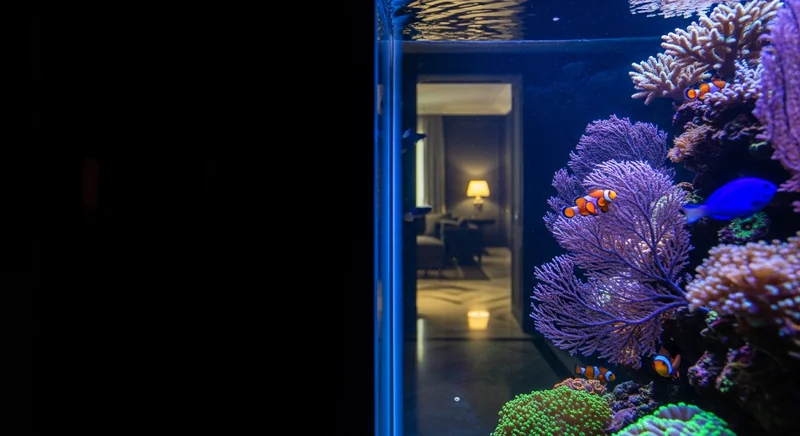
Standard float glass has a faint green tint caused by iron content in the material. This tint is barely perceptible in small panels but becomes increasingly visible at the thicker dimensions required for large tanks. Low-iron glass, often marketed under names such as Starphire or Optiwhite, eliminates this tint almost entirely and produces a viewing experience that is strikingly clear and colour-accurate, making it the preferred choice for luxury installations where the visual quality of the display is paramount.
Acrylic offers exceptional optical clarity in thin panels, with less light distortion than glass at equivalent thicknesses.
However, acrylic scratches more easily than glass, and surface scratches can affect the viewing experience over time if the tank is not maintained with appropriate care.
In a professionally managed installation, this is rarely a significant issue, but it is worth factoring into the decision, particularly for owners who prefer a lower-maintenance material.
Weight, Structure, and Installation Considerations
Weight is one of the most practically significant differences between the two materials, and it becomes increasingly important as tank size increases.
Glass is substantially heavier than acrylic of equivalent dimensions: a large glass aquarium can weigh two to three times as much as a comparable acrylic tank, which has direct implications for floor load capacity, the design of the supporting structure, and the complexity of the installation process.
In properties where the floor structure cannot easily accommodate significant additional weight, acrylic opens up possibilities that glass would foreclose.
Acrylic or glass aquarium decisions at larger scales also affect how the tank is transported and installed.
Large glass panels are fragile, heavy, and require specialised handling during installation, whereas acrylic panels can be cut and bonded on-site with greater flexibility.
For installations in upper-floor apartments or buildings with limited access, acrylic can simplify the logistics considerably without compromising the visual quality of the finished result.
Design Flexibility: Shapes, Curves, and Custom Formats
For luxury aquariums where the design calls for curved panels, cylindrical forms, or complex custom geometries, acrylic versus glass fish tank considerations shift decisively in favour of acrylic.
Acrylic can be heat-formed into virtually any shape, allowing designers to create seamless curved viewing panels, full cylinders, and irregular forms that would be either impossible or prohibitively expensive to achieve in glass.
This flexibility is one of the primary reasons that architectural and sculptural aquarium formats, such as the cylindrical kreisel tank or the curved island installation, are almost always constructed in acrylic.
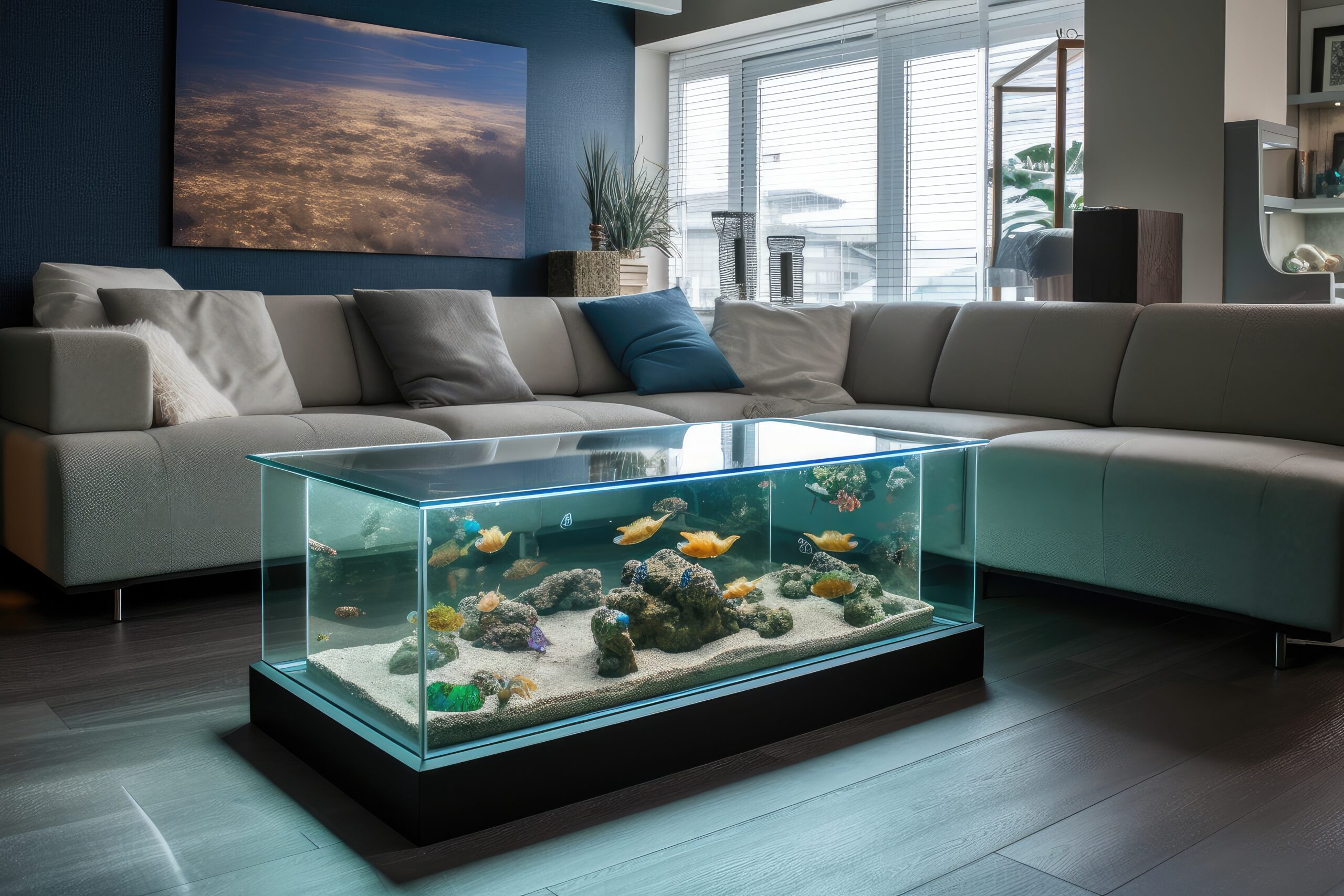
Glass, by contrast, is best suited to rectilinear formats where flat panels are joined at angles. It performs exceptionally well in this context, producing clean sightlines and a rigidity that gives large rectangular tanks a sense of solidity and permanence.
For built-in aquariums and large flat-panel installations, glass or acrylic tank decisions often favour glass precisely because the format plays to the material’s strengths.
Durability, Longevity, and Long-Term Maintenance
Both materials are durable when correctly specified and maintained, but they age differently.
Glass does not scratch easily and retains its optical properties indefinitely under normal conditions. It does not yellow with age or exposure to ultraviolet light, which makes it a reliable long-term choice for installations where the tank is expected to remain in place for many years without material changes.
Acrylic is more susceptible to surface scratching, though minor scratches can often be polished out with appropriate products, which is not possible with glass.
Older grades of acrylic were prone to yellowing over time when exposed to UV light, though modern formulations have largely resolved this issue.
For installations where the tank receives direct sunlight or strong artificial UV sources, specifying UV-stabilised acrylic is important for preserving long-term clarity.
Which Material Is Right for Your Luxury Aquarium?
Rather than declaring one material universally superior, the most useful framework is to match the material to the demands of the specific project. The following guidelines reflect how the choice typically plays out in luxury aquarium design:
- Choose low-iron glass for large flat-panel or built-in installations where optical purity, scratch resistance, and long-term stability are priorities.
- Choose acrylic for cylindrical, curved, or architecturally complex formats, or for upper-floor installations where weight is a structural concern.
- In projects where both formats are under consideration, discuss the specific constraints of the space with an experienced design team before making a final decision.
Frequently Asked Questions
Is acrylic or glass better for a large luxury aquarium?
For very large installations, acrylic is often preferred because of its lighter weight and design flexibility, particularly for curved or non-rectangular formats. For large flat-panel or built-in installations, low-iron glass is frequently the better choice due to its scratch resistance and long-term optical stability. The right answer depends on the specific format, scale, and location of the tank.
Can acrylic scratches be repaired?
Minor surface scratches in acrylic can often be polished out using specialist products, which is a meaningful advantage over glass where scratches are permanent. Deeper scratches may require professional attention, but in a well-maintained installation, significant scratching is rarely an issue.
Which material is more expensive?
At standard sizes, glass is generally less expensive than acrylic. However, at the scale of luxury aquarium installations, the cost difference narrows considerably, and the specific format of the tank, the grade of material chosen, and the complexity of the installation all have a greater influence on overall project cost than the material choice alone.
Is one material safer than the other in the event of impact?
Acrylic is significantly more impact-resistant than glass and is much less likely to shatter under sudden force. Glass, when it does fail, breaks into sharp fragments, whereas acrylic tends to crack rather than shatter. For installations in environments where impact is a realistic concern, such as commercial spaces with high footfall, acrylic offers a meaningful safety advantage.
Making the Right Choice for Your Installation
The acrylic vs glass aquarium question ultimately resolves into a design decision rather than a technical one.
Both materials are capable of producing exceptional results when correctly specified and crafted by skilled hands.
The most important factor is ensuring that the material chosen aligns with the shape, scale, and location of the tank, and that the decision is made with full awareness of the implications for the installation, the viewing experience, and the long-term care of the piece. A conversation with an experienced design team is the most reliable way to arrive at the right answer for a specific project.