Understanding the different types of commercial fish tanks is the first step toward making a decision that genuinely enhances your environment.
Whether you are outfitting a hotel lobby, a corporate headquarters, a restaurant, or a high-end retail space, the format of your aquarium will shape everything from its visual impact to how it integrates within the architecture.
Because commercial settings vary enormously in layout, purpose, and aesthetic intent, there is no single approach that works for every project. The right choice depends on the space itself, the impression you want to leave, and the level of customisation you are prepared to invest in.
What Makes a Commercial Aquarium Different from a Residential One?
At first glance, commercial and residential aquariums may appear similar, but they are designed with very different priorities. Commercial installations must deliver consistent visual impact, operate reliably for long hours, and integrate seamlessly into environments where performance and presentation are equally important.
Scale and Visibility
Commercial aquariums are typically designed to be viewed by many people at once and often from a distance. This usually means larger formats, clearer sightlines, and lighting calibrated to remain effective in bright environments such as hotel lobbies, restaurants, or retail spaces. Unlike residential tanks, which are often appreciated up close, commercial installations must function as focal points within a wider architectural setting.
Architectural Integration
Another key difference is how the aquarium is incorporated into the space. Residential aquariums are often freestanding or placed on cabinetry, while commercial installations are frequently built into walls, partitions, reception desks, or custom furniture. This level of integration requires coordination with architects, interior designers, and contractors so the aquarium reads as part of the architecture rather than an added feature.
Technical Systems and Reliability
Commercial aquariums are engineered for continuous operation and minimal disruption. Higher-capacity filtration, professional lighting systems, automated water top-off, and remote equipment placement are commonly included. These elements help maintain water quality and visual clarity while ensuring the installation performs consistently throughout long opening hours.
Maintenance and Operational Planning
Maintenance is also approached differently in commercial environments. Access panels, service areas, and equipment locations are planned from the outset so routine servicing can be carried out discreetly. Most commercial aquariums are supported by professional maintenance schedules, which influence both the technical layout and the overall design of the installation.
What are the most common types of commercial aquariums?
Wall-Integrated and Built-In Aquariums
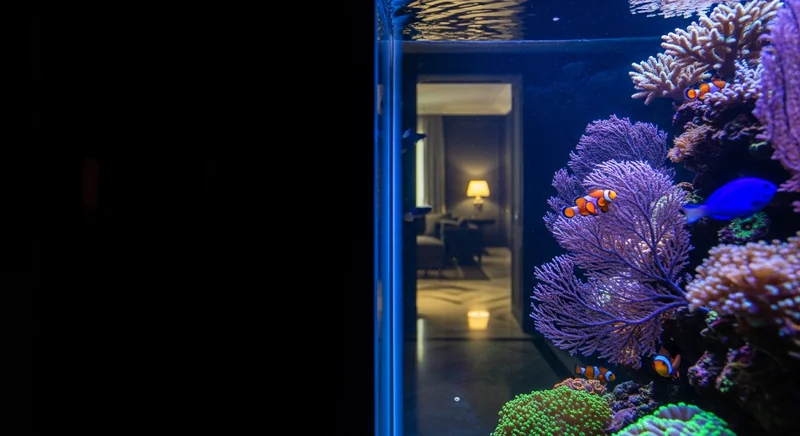
Among the most dramatic types of commercial fish tanks, wall-integrated aquariums occupy a category all their own.
These installations are built directly into the architecture of a space, whether recessed into a load-bearing wall, framed within a custom partition, or designed as a room divider between two areas. The result is an aquarium that appears to belong to the building itself, as though it were always part of the original design.
This format is particularly well-suited to hotel lobbies, private members’ clubs, and corporate reception areas where the first impression must carry weight.
Because the tank is integrated into the structure, every element of its framing, lighting, and cabinetry can be tailored to match the surrounding material palette, whether that means polished marble, brushed steel, or lacquered wood. The visual effect is one of seamless continuity rather than decorative addition.
Freestanding Column and Cylinder Aquariums
Freestanding column and cylinder aquariums are among the most versatile types of commercial fish tanks, as they can be positioned independently without any structural modification to the surrounding space.
Their cylindrical form allows viewing from all angles, making them ideal for open-plan areas where guests or clients approach from different directions.
A restaurant, a wellness centre, or a luxury retail boutique can all benefit from a centrally placed cylinder that becomes the visual anchor of the room.
The height and diameter of these pieces can be adjusted to suit the proportions of the space, and the cabinet base, if present, can be finished in materials that complement the existing interior.
Because there is no wall-mounted infrastructure required, this format also offers a degree of repositioning flexibility that built-in solutions do not, though they are typically designed as permanent installations once their equipment is in place.
Room Divider and Partition Aquariums
Room divider aquariums occupy a unique position among the types of commercial fish tanks because they serve two functions at once.
On one hand, they define and separate distinct zones within a larger space. On the other hand, they maintain a visual connection between those zones through the translucency of the water and the movement of fish.
This dual role makes them an especially compelling choice for restaurants, spas, and open-plan offices where a degree of privacy is desirable without the sense of enclosure that a solid wall would create.
In hospitality settings, this format has been used to delineate dining areas, to separate reception desks from lounges, and to frame transition corridors with something visually alive.
The aquarium acts not only as a divider but also as a living centrepiece that gives guests something to pause and observe, extending the time they spend in a space and elevating the overall atmosphere.
Floor-to-Ceiling and Oversized Statement Tanks
For environments where impact is the primary goal, floor-to-ceiling aquariums represent the most ambitious of all types of commercial fish tanks.
These installations typically span the full height of a wall or occupy an entire structural bay, creating an immersive visual experience that transforms the character of a space entirely.
The scale of these projects requires significant structural planning, specialist installation, and close coordination with architects or interior designers, but the result is a feature that is difficult to replicate through any other medium.
Hotels that want to establish a landmark interior, high-end restaurants seeking a defining centrepiece, and corporate environments wishing to project a sense of ambition and investment will often consider this format.
Because every element is bespoke, including the glass dimensions, the internal ecosystem, the lighting design, and the cabinetry surrounding it, a consultation is always the right starting point for understanding what is feasible within a given space and budget.
Custom Furniture-Integrated Aquariums
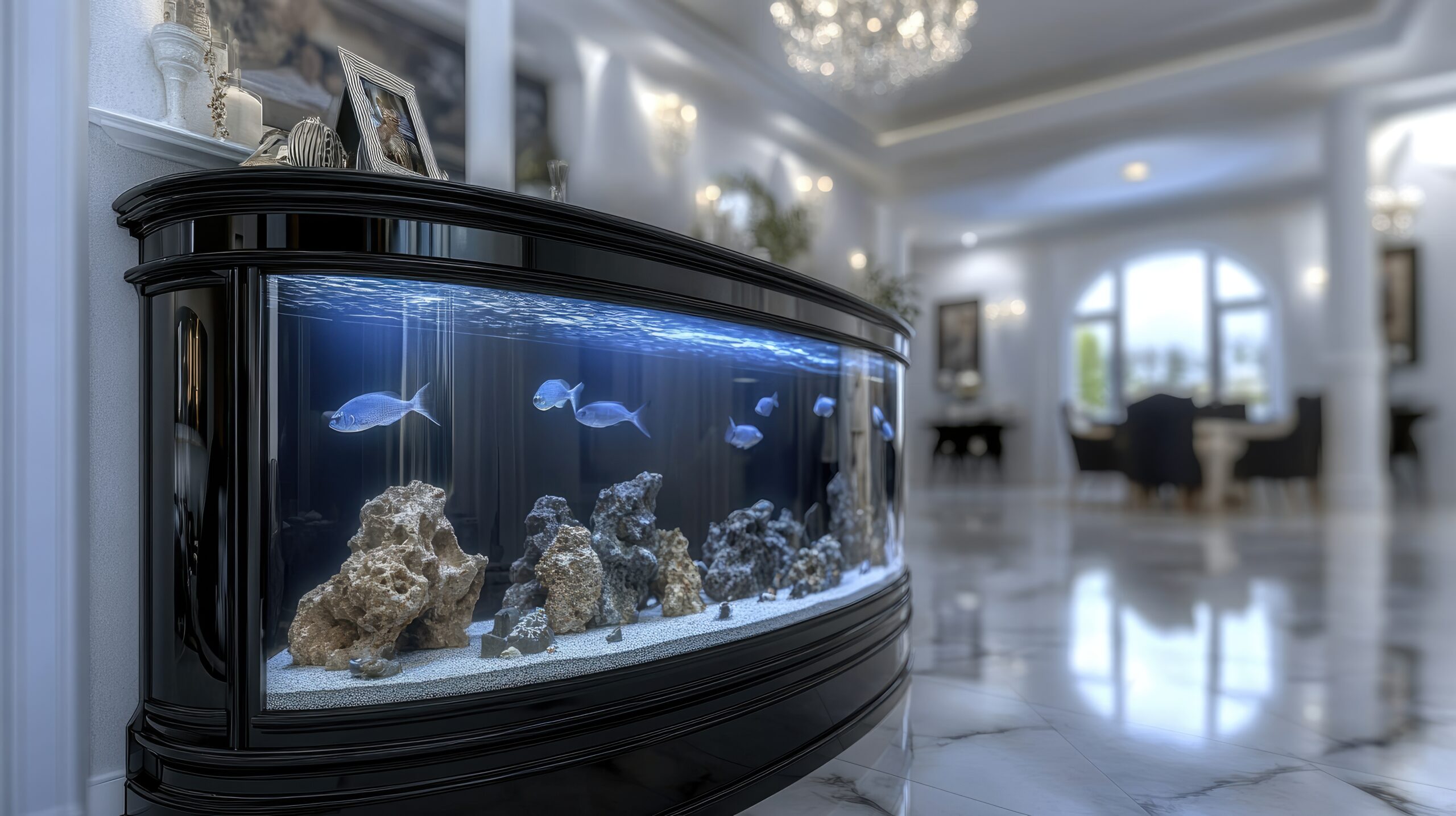
A more contained but equally refined option within the types of commercial fish tanks is the furniture-integrated aquarium, in which the tank forms part of a bespoke piece such as a reception desk, a bar counter, a credenza, or a conference table base.
This format brings the aquarium into direct contact with day-to-day business activity, making it something that clients, guests, or colleagues encounter at close range rather than observing from a distance.
The practical advantage of furniture integration is that the aquarium becomes invisible as infrastructure and entirely visible as design.
The mechanical components can be concealed within the furniture itself, maintaining a clean and uncluttered appearance, while the aquatic environment remains fully visible through glass or acrylic panels.
For businesses that value discretion alongside elegance, this format offers a balance that few other options can match.
How to Choose the Right Commercial Aquarium Format
With so many types of commercial fish tanks available, the selection process is best approached by thinking about the space before thinking about the aquarium.
The architectural character of the environment, the flow of foot traffic, the height of the ceilings, and the existing material palette all inform which format will feel most natural.
- A cylinder works beautifully in an atrium but may feel isolated in a narrow corridor.
- A built-in wall panel reads as architectural in a formal reception but might compete with natural light in a sun-filled restaurant.
It is also worth considering who will maintain the aquarium once it is installed.
Commercial environments typically require a managed service, where a specialist team takes responsibility for water quality, feeding schedules, and equipment checks on a regular basis.
This ongoing relationship is part of what transforms a beautiful installation into a seamless long-term investment rather than a source of concern.
Frequently Asked Questions
What are the most common types of commercial fish tanks for hotels and restaurants?
The most requested formats for hospitality environments include wall-integrated aquariums, room dividers, and freestanding cylinder tanks. Each brings a different visual quality and level of structural involvement. The right choice depends on the size of the space, the desired impact, and the overall interior concept. A consultation with a specialist helps narrow down the options based on the specific conditions of the environment.
Can a commercial aquarium be fully customised to match an existing interior?
Yes. All types of commercial fish tanks designed for high-end environments are tailored to the space they will inhabit. Cabinet finishes, glass dimensions, lighting temperatures, and the choice of aquatic ecosystem are all defined during the design process. The goal is always for the aquarium to feel like an integral part of the interior rather than something inserted after the fact.
Get inspired by these unique aquarium ideas.
How is a commercial aquarium maintained once it is installed?
Commercial aquariums require regular professional maintenance to keep water chemistry balanced, filtration systems functioning correctly, and fish populations healthy. Most high-end installations come with a managed service agreement that covers all routine care, meaning the business owner has no need to manage the technical side personally. This approach ensures the aquarium remains in pristine condition without placing any burden on in-house staff.
How long does it take to install a commercial aquarium?
The timeline varies depending on the complexity and format of the project. Furniture-integrated and freestanding installations tend to involve a shorter on-site phase, while wall-integrated or floor-to-ceiling installations require more coordination with the broader construction or refurbishment schedule. Every project is unique, and the timeline is always discussed in detail during the planning stage so that all parties can align their schedules accordingly.
Are commercial aquariums suitable for smaller business premises?
Absolutely. The types of commercial fish tanks available today range from large-scale architectural statements to more contained furniture-integrated pieces that suit compact environments. A well-placed aquarium in a smaller space can have just as much impact as a grand installation in a larger one, provided the format is chosen with the proportions of the room in mind. The key is thoughtful selection and careful integration rather than scale alone.
A Considered Choice Begins with the Right Conversation
The variety of types of commercial fish tanks available today means there is a format suited to almost any professional or hospitality environment.
Whether you are drawn to the architectural presence of a wall-integrated panel, the sculptural quality of a cylinder, or the subtle elegance of a furniture-integrated piece, the outcome in each case depends on how well the aquarium is matched to its setting.
Cavenza specialises in turnkey custom aquarium installations designed to integrate seamlessly into refined commercial spaces, with every detail crafted to the specific requirements of the project. Reaching out for an initial consultation is the natural first step toward understanding which format will serve your space best.