When someone starts thinking about a saltwater aquarium, the question of marine vs reef tank comes up quickly.
Both are breathtaking in their own way, but they represent very different commitments in terms of setup, maintenance, and the kind of living environment they create.
This guide walks through every meaningful distinction between the two, including the visual experience each offers, the equipment required, the ongoing maintenance demands, and how each type integrates into a residential or commercial environment.
If you are already considering a bespoke installation, it is also worth understanding the full process behind a custom fish tank installation process.
By the end, you will have a clear sense of which direction makes sense for your situation.
What Is a Marine Tank?

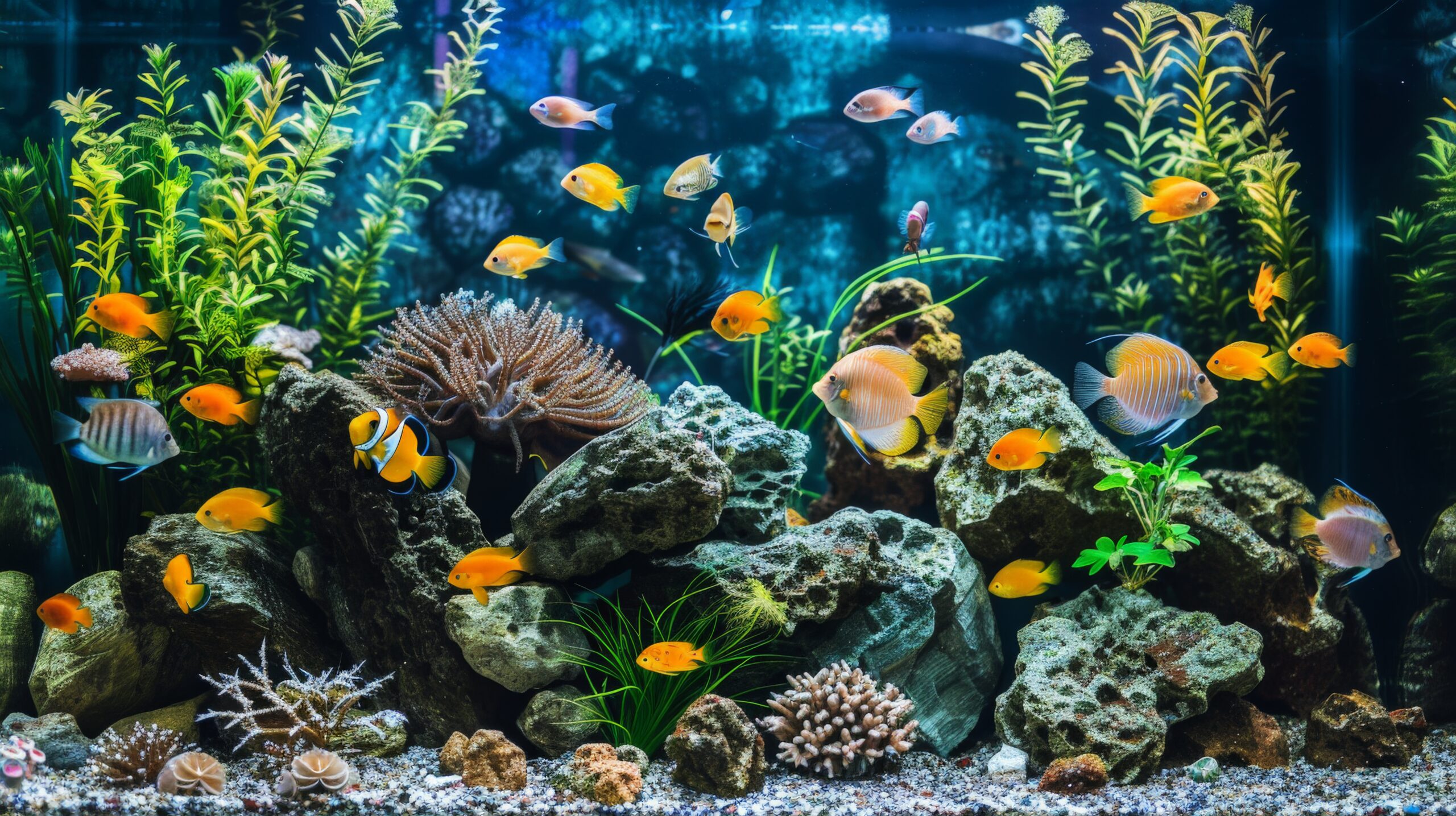
A marine tank, sometimes called a saltwater fish-only tank or FOWLR (Fish Only with Live Rock), is designed primarily to house saltwater fish in a stable, well-filtered environment.
The focus is on the fish themselves rather than corals or photosynthetic invertebrates. Live rock is often included to support biological filtration and add a natural aesthetic, but coral cultivation is not part of the setup.
Marine tanks are considerably more forgiving in terms of water chemistry. While salinity, temperature, and basic parameters still need to be maintained, the precision required is much lower than in a reef system.
This makes marine tanks a strong choice for those new to saltwater aquariums, or for anyone who wants the visual impact of ocean life without the technical complexity of coral care.
What Is a Reef Tank?

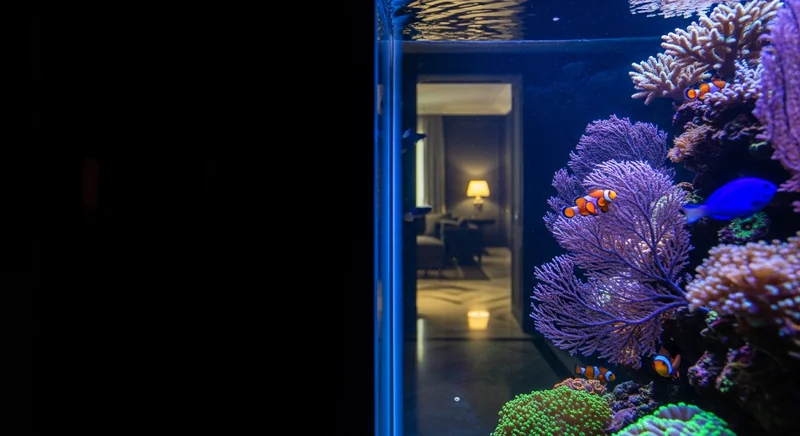
A reef tank is a complete marine ecosystem that includes not only fish but also living corals and invertebrates.
The corals are the defining feature, they are photosynthetic organisms that require precise water chemistry, high-intensity lighting, and strong, directional water flow to survive. In addition, the balance between fish and coral must be considered carefully, because not all marine fish are reef-safe.
Reef tanks are typically categorized by the type of coral they support:
- Soft coral reef tanks: house species like Xenia and leather corals, are more tolerant of fluctuations and work well for those entering the reef hobby for the first time.
- Large Polyp Stony (LPS) coral tanks: represent the next level of complexity, requiring more stable calcium and alkalinity levels.
- Small Polyp Stony (SPS) coral tanks: house species like Acropora, are the most demanding and reward experienced aquarists with some of the most spectacular color and structure in the hobby.
Aquatic reef designs at a high level require investment in equipment that goes beyond basic marine keeping. High-output full spectrum lighting, protein skimmers, calcium reactors, and automated dosing systems are standard components in a well-run reef setup.
Key Differences Between Marine and Reef Tanks
Choosing between a marine tank and a reef tank comes down to how complex a system you want to manage and what kind of visual result you expect.
The differences are not just aesthetic: they affect how the aquarium is built, equipped, and maintained over time.
Aquarium Equipment Differences
A marine fish tank is typically built around a simpler configuration. The aquarium itself can be standard glass or acrylic, often without complex overflow systems. Filtration is handled through either an external canister filter or a sump, paired with a protein skimmer to remove organic waste. Lighting is moderate and primarily aesthetic, designed to highlight fish rather than support biological processes. Water movement is present but relatively gentle, usually provided by one or two circulation pumps.
A reef tank, by contrast, is designed as a complete life-support system for corals. The aquarium is usually equipped with an overflow system connected to a sump, which houses filtration, skimming, and additional equipment. This allows for greater water volume, improved stability, and cleaner visual presentation.
Lighting is a critical upgrade in reef systems. High-output LED fixtures are required to support coral photosynthesis, with programmable control over spectrum and intensity. Water movement is also far more advanced, with multiple powerheads or wave makers creating strong, variable flow patterns that replicate ocean conditions.
In addition, reef tanks often include dosing systems to maintain calcium, alkalinity, and magnesium levels.
Water Parameters and Stability
Water chemistry in a marine tank focuses on maintaining stable salinity, temperature, and a healthy nitrogen cycle. As long as ammonia and nitrite are controlled and nitrate is kept within acceptable levels, most marine fish will remain stable and healthy.
In a reef tank, water chemistry becomes significantly more demanding. In addition to the basics, calcium, alkalinity, magnesium, and phosphate must be carefully controlled. These parameters directly affect coral growth, coloration, and survival.
Even small fluctuations can lead to coral stress, bleaching, or long-term decline. For this reason, reef tanks require more frequent testing and a more precise approach to dosing and water management.
Fish and Coral Compatibility
In a marine aquarium, fish compatibility is primarily based on behaviour. Species are chosen according to temperament, size, and territorial dynamics. This allows for a relatively wide selection of fish, including more aggressive or opportunistic species.
In a reef tank, compatibility extends beyond fish behaviour to include interactions with corals. Many popular marine species (including certain angelfish, butterflyfish, and puffers) will nip at or consume coral tissue, making them unsuitable for reef environments.
Maintenance Intensity
Maintenance is where the practical difference between marine and reef tanks becomes most apparent.
A marine tank typically requires regular water changes, equipment cleaning, and routine testing. With a well-designed filtration system, ongoing care can be relatively straightforward and predictable.
A reef tank requires a more hands-on and consistent approach. In addition to standard maintenance, calcium and alkalinity levels must be monitored and adjusted, equipment must be inspected more frequently, and corals may require targeted feeding depending on the system.
More importantly, reef tanks demand closer observation, for example early signs of imbalance (such as coral retraction, algae growth, or subtle changes in colour) need to be identified and addressed quickly.
This higher level of attention is not a drawback for many owners, but it is an important factor to consider when choosing between the two formats.
Marine vs Reef Tank: Which One Is Right for You?
There is no universal answer, but there are clear patterns that point in one direction or the other.
- If you are new to saltwater aquariums, a marine tank is the logical starting point. It allows you to develop an understanding of water chemistry and equipment without the added demands of coral care.
- If the aquarium will be installed in a commercial or hospitality environment where maintenance is managed by a professional service, both types are viable. The choice depends more on the design vision and the level of maintenance support available.
- If you are drawn to the complexity and visual depth of a reef system and are ready to invest in both the equipment and the ongoing care, a reef tank offers a level of engagement and beauty that is genuinely unmatched.
- If the aquarium is being designed as an integrated architectural element in a luxury home or commercial space, a consultation with specialists who understand both the technical and design dimensions is essential.
Frequently Asked Questions
Can a marine tank be converted into a reef tank later?
It is possible, but it is rarely straightforward. Transitioning from a marine fish-only setup to a reef system typically requires upgrading the lighting, adjusting water flow, adding dosing equipment, and in some cases modifying the rockscape. Starting with a reef-ready design from the beginning is generally a more reliable path if a reef is the eventual goal.
Is a marine tank easier to maintain than a reef tank?
Yes, in most respects. A marine fish-only system requires regular water changes and basic parameter monitoring, but it is considerably less demanding than reef tank maintenance, which requires close attention to calcium, alkalinity, and other reef-specific parameters.
What size tank works best for each type?
Both types benefit from larger volumes, which buffer against sudden changes in water chemistry. That said, a well-managed marine fish tank can work at smaller sizes, while reef systems are generally more stable in tanks of 300 liters or more. Larger reef tanks also offer more flexibility in coral placement and livestock selection.
Thinking About the Right Setup for Your Space?
The decision between a marine vs reef tank is ultimately shaped by the space, the lifestyle, and the level of engagement you want with the system.
Both can be extraordinary when they are designed and maintained with care.
For environments where the aquarium is an integral part of the architecture rather than a standalone addition, the best outcomes come from thinking through these questions early, ideally before the design phase is complete.
Working with a specialist in luxury aquariums ensures that both the technical and aesthetic aspects are resolved from the outset.