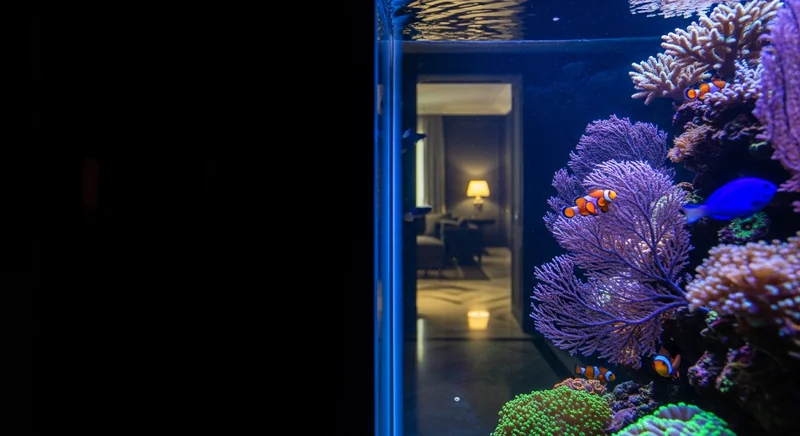
A wall fish tank can completely change how a room feels. When done properly, it stops being an object placed in a home and becomes part of the architecture itself, like a living window built into the wall.
The fish appear to move through the structure of the space, and the aquarium becomes a natural focal point rather than an added feature.
But the reality is very different when it is not planned correctly. In-wall aquariums are permanent structural installations. If depth, access, ventilation, or weight distribution are miscalculated, the result is not just visual disappointment, it becomes a long-term maintenance and building issue.
This guide looks at practical wall fish tank ideas that actually work in real homes, and what you need to understand before choosing a format.
What Is a Wall Fish Tank?
A wall fish tank (or in-wall aquarium) is an aquarium that is built into the structure of a wall rather than placed in front of it. The viewing panel is typically flush or slightly recessed, so the tank appears integrated into the architecture.
Unlike decorative “wall-mounted aquariums” that sit like framed objects, a real in-wall aquarium requires:
- Structural space inside or behind the wall
- A dedicated area for filtration and equipment
- Planned access for long-term maintenance
- Load-bearing support for the full weight of water and glass
This is not furniture — it is a built-in architectural system that must be designed with the room, not added afterward.
Check out this article about unique fish tank ideas to get inspired.
3 Wall Fish Tank Ideas Worth Considering
1. Feature Wall Aquarium (Single Front View)
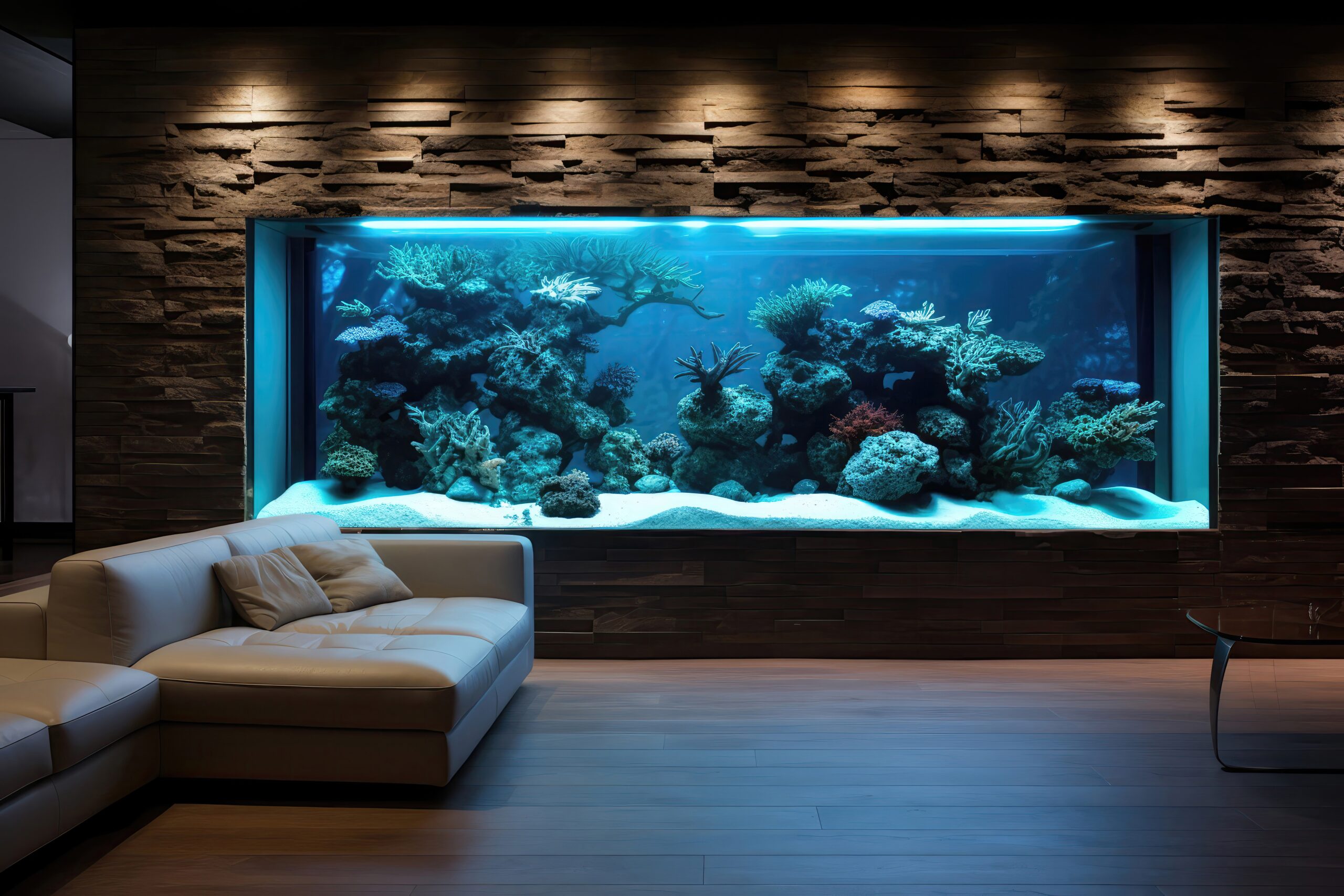
This is the most reliable and widely used format. The aquarium is built into a feature wall and viewed from one main side.
It works best in living rooms or open-plan spaces where the aquarium replaces artwork, a TV wall, or a fireplace as the focal point. The key design advantage is control: lighting, viewing angle, and aquascape composition can all be optimized for a single perspective.
2. Double-Sided Partition Aquarium
This format turns the aquarium into a spatial divider between two rooms, such as a kitchen and dining area or hallway and living space.
Instead of closing a space, it separates it visually while still keeping openness and light flow. The design challenge here is balance — the aquarium must look equally intentional from both sides, which affects aquascape layout and equipment placement.
3. Built-In Media or Cabinet Wall Aquarium
If structural wall modification is not possible, the aquarium can be integrated into custom cabinetry or a media wall.
This is one of the most practical solutions for existing homes because it avoids major construction while still delivering a built-in aesthetic. Equipment is usually hidden in lower cabinets, making maintenance access more controlled.
What Actually Makes a Wall Aquarium Work (And What Most People Miss)
The success of an in-wall aquarium is not defined by the glass or fish — it is defined by planning decisions that are made before construction begins.
The most important factor is structure: the wall must be able to support the full weight of the aquarium once filled, which can reach hundreds or even thousands of kilograms depending on size. This requires coordination with builders or architects early in the process, not after design is finalized.
Equally important is maintenance access: every aquarium needs ongoing care, and if access is difficult or not properly designed, even a perfect installation will degrade over time. The most successful installations always include a clearly planned service route, whether through a rear access panel, top opening, or adjacent utility space.
Ventilation and moisture control are also critical. Aquariums naturally produce humidity, and if the wall cavity is not properly ventilated or sealed with appropriate materials, long-term moisture damage can occur behind the structure.
Finally, lighting should be treated as part of the architecture, not an accessory. The goal is not just to illuminate water, but to make the aquarium feel like it belongs within the room’s lighting environment.
For a deeper understanding of how these systems come together in practice, you can explore the custom installation process here.
Frequently Asked Questions
Can a wall fish tank be installed in an existing home?
Yes, but it requires more careful planning than a new build. In an existing home, the wall cavity depth, the location of structural elements, and the routing of plumbing and electrical services all need to be assessed before the installation can be designed. In most cases, it is practical, but the specific constraints of the space determine the format and depth of the installation that is possible.
How deep does the wall need to be for an in-wall aquarium?
Minimum wall cavity depth depends on the depth of the tank, which typically starts at around 400 to 600mm for a medium installation, plus clearance for equipment and maintenance access. Shallower tanks with a panoramic horizontal format can sometimes be accommodated in less depth, but this requires specific design to work within the constraints.
What is the difference between an in-wall aquarium and a wall-mounted aquarium?
A wall-mounted aquarium hangs on the surface of the wall, much like a picture frame. It does not require any work within the wall itself and is typically a smaller, acrylic format designed for display rather than a full aquatic environment. An in-wall aquarium is recessed into the wall structure, requires architectural planning, and can support a fully functional aquarium of significant size and complexity.
What type of fish works best in a wall aquarium?
Fish selection for an aquarium in wall installations is the same as for any aquarium of equivalent volume and format. The key factors are compatibility between species, suitability for the water type (freshwater or saltwater), and visual impact from the front viewing panel. Active mid-water swimmers, reef fish, and planted freshwater species with colorful foliage all perform well in wall installations. The specific selection should be guided by the tank dimensions and the type of aquascape planned.
How is a wall fish tank maintained?
Maintenance access is provided through the top of the tank, through a service panel in the wall cavity, or through an adjacent room depending on the installation design. Regular maintenance includes partial water changes, glass cleaning from the front panel, equipment checks, and livestock care. For custom installations in private residences, professional maintenance services are typically arranged on a scheduled basis.
Learn more about custom aquariums by visiting our site.