In most interiors, corners are treated as residual space. They receive whatever does not fit elsewhere: a floor lamp, a plant, or nothing at all. Yet corners are structurally significant positions within a room.
They are the points where two walls meet, which means they are visible from virtually every position within the space.
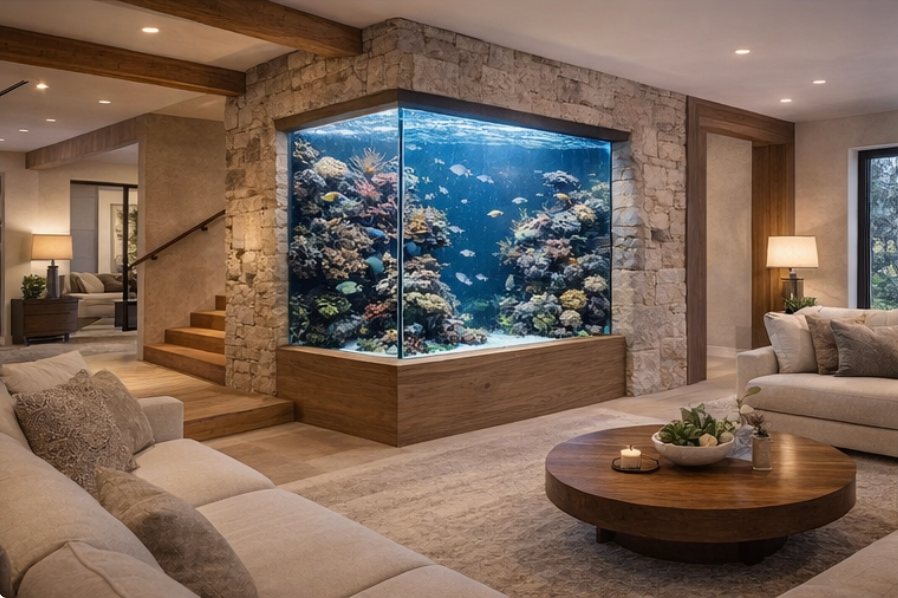
A corner aquarium recognises this potential and redirects it entirely, transforming a neglected area into a carefully composed focal point that draws the eye and enriches the atmosphere of the room.
For homeowners and designers looking to introduce something both purposeful and beautiful, this format offers a solution that is as spatially intelligent as it is visually compelling.
Corner Aquarium Formats: Choosing the Right Shape for Your Space
One of the most useful qualities of the corner aquarium concept is the range of formats it encompasses, each suited to a different interior language. The three most common options are:
- Bow-front corner tank — features a curved front panel that bows gently outward into the room. This curvature softens the geometry of the corner and creates an expansive viewing surface that feels wider than its actual dimensions. It works particularly well in traditional or transitional interiors where clean lines and organic forms coexist comfortably.
- L-shaped aquarium — extends along both adjacent walls simultaneously, creating a panoramic viewing experience from two directions at once. This format suits open-plan spaces where the aquarium needs to be visible from multiple seating areas.
- Triangle aquarium — the most architecturally precise of the three. Its geometric form mirrors the right-angle of the corner exactly, and when executed in high-quality glass with a well-crafted base, it reads as a piece of furniture-grade design. It is especially well suited to contemporary interiors with strong geometric themes.
In all three cases, the choice of format should be guided by the proportions and aesthetic of the specific room. The interaction between the tank and its surroundings is what determines the success of the installation.
Corner fish tank with Marine or Freshwater?
The choice between a marine and a freshwater environment is one of the most significant decisions in planning a corner aquarium, as it affects both the visual character of the display and the level of ongoing care required.
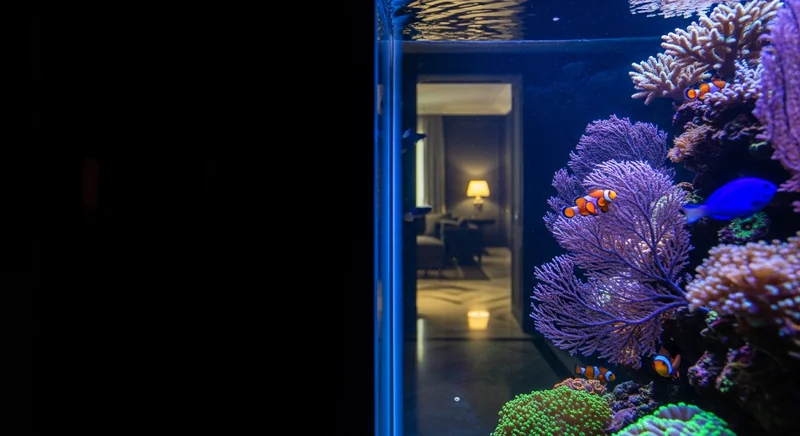
L shaped aquariums bring an extraordinary depth of colour and biological diversity to the installation. The vivid palette of reef fish, combined with the textural richness of live rock and coral, creates a display that changes continuously and rewards close attention. Marine systems are widely considered the most visually spectacular option for luxury interiors, and when the lighting is calibrated carefully, the colour saturation and luminosity they produce is unlike anything achievable in a freshwater setting.
Freshwater corner aquariums offer a different but equally valid aesthetic, and in some contexts they are the more appropriate choice. Planted freshwater tanks, in particular, create a lush, verdant quality that complements natural materials like stone, timber, and linen in ways that a marine system may not. They also tend to be more forgiving in terms of water chemistry and are often more straightforward to maintain consistently. For owners who want a beautiful living installation without committing to the more intensive requirements of a marine system, a well-planted freshwater corner aquarium represents an excellent alternative.
Design Considerations for an L-Shaped Aquarium
The visual success of a corner aquarium depends as much on the stand and surrounding cabinetry as it does on the tank itself. In a luxury interior, these elements should complement the existing finishes rather than contrast with them. A stand crafted in the same timber used for other furniture creates a sense of continuity, while a stone or polished concrete base adds gravitas and references architectural materials used elsewhere in the space.
Lighting deserves particular attention on two levels:
- Internal lighting should enhance the viewing experience, bringing out the colours of the fish and any live rock or planted elements within the tank.
- Ambient lighting in the corner itself, such as a recessed ceiling light positioned to graze the tank, adds depth and draws attention to the feature without overwhelming it.
For owners working with an interior designer, lighting is a dimension worth discussing early. The relationship between the aquarium and the broader lighting scheme significantly influences how the feature reads within the room.
Frequently Asked Questions
How much space does a corner aquarium typically require?
The footprint of a corner aquarium depends on the format and size chosen. A standard bow-front corner tank might occupy a footprint of roughly 90 centimetres along each adjacent wall, while a larger l shaped or custom installation can extend further depending on the proportions of the room. Because these tanks are designed specifically for corners, they generally use floor space more efficiently than equivalent rectangular tanks positioned against a flat wall.
Can a corner aquarium be used in a commercial space such as a hotel lobby or restaurant?
Yes, corner aquariums work well in commercial hospitality environments, particularly in areas where a bold but space-efficient feature is needed. In a hotel lobby, a large corner installation draws guests into the space and creates a memorable arrival experience. In a restaurant or private dining room, it adds atmosphere without dominating the sightlines across the seating area. Commercial installations typically require more robust filtration systems and benefit greatly from a professional maintenance arrangement.
Learn more about unique fish tank ideas to get inspired.
Is a corner aquarium harder to maintain than a standard rectangular tank?
Maintenance requirements are similar to those of a standard aquarium of comparable size. The main practical consideration is ensuring that access to the tank for water changes and cleaning is factored into the design from the outset. A well-planned installation will include accessible service areas and a filtration system sized appropriately for the volume of water, making regular maintenance straightforward.
What is the difference between an L shaped aquarium and a triangle aquarium?
An l shaped aquarium extends along two adjacent walls to create a panoramic display visible from both directions, while a triangle aquarium is contained within the corner itself and has a geometric, triangular footprint. The l shaped format provides more total water volume and a wider viewing area, whereas the triangle format is more architecturally precise and tends to suit contemporary interiors with a clean, geometric aesthetic. The right choice depends on the space, the viewing angles available, and the overall design intention.
Can the stand or cabinet of a corner aquarium be customised to match existing furniture?
Yes, and for a luxury interior this level of customisation is strongly recommended. A bespoke stand or cabinet designed in the same material and finish as the surrounding furniture integrates the aquarium into the room in a way that a standard product cannot achieve. Materials such as solid wood, lacquered panels, stone, and brushed metal can all be used depending on the interior language, and the hardware details can be matched to existing fittings for a fully cohesive result.
Giving Every Corner the Attention It Deserves
A corner aquarium is one of those rare design solutions that addresses a genuine spatial problem while delivering something genuinely beautiful in return. By occupying a part of the room that is typically overlooked and transforming it into a considered, living feature, it elevates the interior in a way that few other interventions can match. Whether the intent is to introduce colour and movement into a calm, neutral space or to anchor an open-plan room with a dramatic focal point, a corner aquarium designed and crafted with the specific space in mind offers an outcome that rewards both the eye and the imagination. A consultation with an experienced design team is the most productive way to explore what this could look like in a specific home.